
How to Start a CDL Training Program
Jason Boudreau • March 7, 2025
Launching a CDL training program allows carriers, fleets, and logistics companies to hire new drivers while ensuring FMCSA and ELDT compliance is met. This approach helps reduce driver shortages, lower hiring costs, and provide hands-on training tailored to company-specific equipment, safety protocols, and job requirements.
To operate legally and efficiently, programs must follow FMCSA guidelines, state regulations, and ELDT training standards. Below is a step-by-step guide to starting your own CDL training program.

Setting Up a Company CDL Training Program
Launching a CDL training program allows carriers, fleets, and logistics companies to hire new drivers while ensuring FMCSA and ELDT compliance is met. This approach helps reduce driver shortages, lower hiring costs, and provide hands-on training tailored to company-specific equipment, safety protocols, and job requirements.
To operate legally and efficiently, programs must follow FMCSA guidelines, state regulations, and ELDT training standards. Below is a step-by-step guide to starting your own CDL training program.
Register With The FMCSA Training Provider Registry (TPR)
Before offering CDL training, companies must register with
FMCSA’s Training Provider Registry (TPR) to ensure compliance with Entry-Level Driver Training (ELDT) standards.
To become a registered training provider on the Federal Motor Carrier Safety Administration's (FMCSA) Training Provider Registry (TPR), it's essential to understand and comply with the Entry-Level Driver Training (ELDT) standards.
The following article is a step-by-step guide on how to get registered on the FMCSA's Training Provider Registry:
Meet State Requirements to Become a CDL Training Provider
Each state has different requirements for becoming a CDL training provider. Contact your local Department of Transportation (DOT) or state licensing agency to:
- Verify state-specific licensing and certification requirements.
- Ensure you meet facility, instructor, and vehicle qualifications.
- Understand any additional state-mandated training regulations.
Secure a Qualified Training Yard & Vehicles
To conduct Behind-The-Wheel (BTW) training, companies must have access to FMCSA compliant training yards and vehicles that meet CDL testing standards.
- Training Yard:
Must be large enough for maneuverability training, parking, and pre-trip inspections.
- Trucks:
Must meet CDL testing specifications, including proper weight, transmission type, and safety equipment.
Meeting ELDT Requirements for In-House CDL Training set forth by the FMCSA 49 CFR Part 380
The
Entry-Level Driver Training (ELDT) FMCSA 49 CFR Part 380 requires companies to provide both theory training and behind-the-wheel training before a driver can take the CDL skills test.
ELDT Theory Curriculum
Companies must provide
ELDT-compliant theory training that covers all curriculum set forth by the FMCSA.
The CDL PowerSuite ELDT Solution
- Pre-built ELDT-compliant theory curriculum available online.
- Students must pass with an 80% or higher score to advance.
- Seamless FMCSA Training Provider Registry (TPR) submissions.
ELDT Behind-The-Wheel (BTW) Training
Companies must provide hands-on behind-the-wheel training (BTW) that includes both range and road training to meet FMCSA Entry-Level Driver Training (ELDT) requirements. This ensures trainees develop the necessary skills to operate a commercial vehicle safely and efficiently.
Range Training – Mastering Vehicle Control in a Controlled Environment
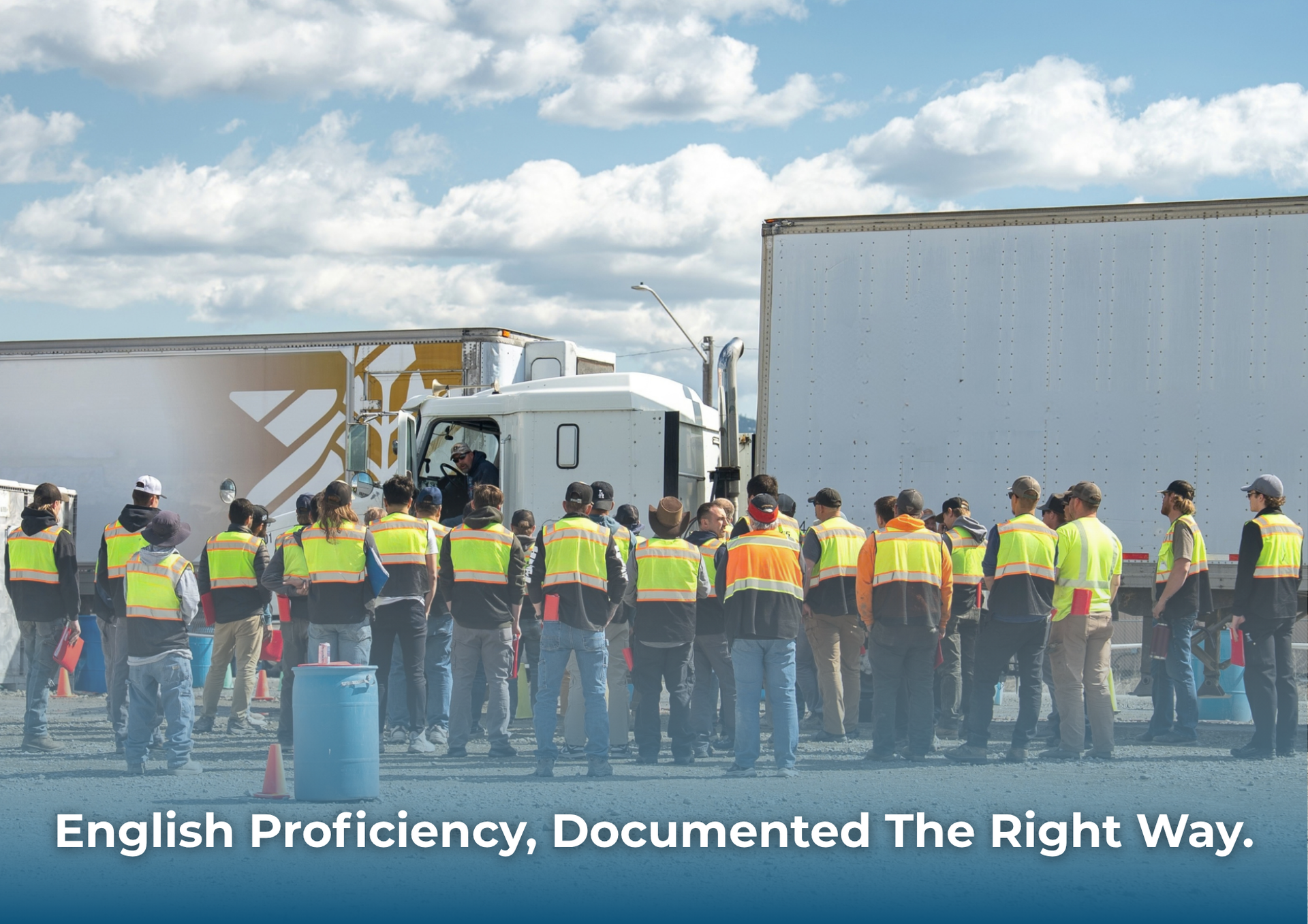
Range training takes place in a closed-course training yard where students learn to control and maneuver a commercial vehicle in a safe, structured environment before entering public roadways.
Range Training Skills:
- Pre-Trip Inspection: Students learn to inspect vehicle components, ensuring the truck is safe for operation.
- Straight-Line Backing: Practice backing the vehicle in a straight line within a designated lane.
- Offset Backing (Left & Right): Trainees maneuver the truck into a parking spot from an angled position.
- Parallel Parking (Driver & Passenger Side): Ensures drivers can park safely in tight spaces.
- Alley Docking: Backing the vehicle into a dock or tight space at a 90-degree angle.
- Vehicle Control & Slow Maneuvers: Developing skills for low-speed operations in confined spaces.
- Clutch & Gear Control (Manual Transmission): Ensuring smooth shifting and power control for manual CDL training.
Road Training – Real-World Driving Experience in Traffic Conditions
Road training exposes trainees to various driving conditions on public roads, helping them gain experience handling a commercial vehicle in real-world scenarios.
Road Training Skills:
- Urban & Highway Driving: Navigating city streets, highways, and interstates while adhering to speed limits and regulations.
- Lane Changes & Merging: Practicing safe merging techniques and lane changes in high-traffic areas.
- Turns & Intersections: Making controlled left and right turns while managing space and clearance.
- Railroad Crossings & Hazard Awareness: Understanding procedures for safely crossing railroad tracks and identifying road hazards.
- Emergency Procedures & Braking Techniques: Learning how to respond to emergencies, including sudden stops and hazard avoidance.
- Shifting & Speed Control: Maintaining appropriate speeds, especially on hills and curves, while shifting smoothly.
- Nighttime & Adverse Weather Training (if applicable): Preparing students for low-visibility and hazardous driving conditions.
The CDL PowerSuite Behind-The-Wheel Solution
CDL PowerSuite provides a comprehensive digital solution for range and road training, ensuring FMCSA compliance while streamlining instructor oversight and student progress tracking.
- Digital Instructor Portal & Live Progress Tracking: Track student proficiency in real-time with pre-loaded training categories for both range and road training.
- Automated Training Logs & Compliance Records: Log training hours instantly and store driving assessments to simplify audits.
- Real-Time Performance Feedback & Scorecards: Provide structured feedback as students complete each maneuver, ensuring they meet FMCSA proficiency standards.
With CDL PowerSuite, training providers can maximize efficiency, reduce paperwork, and deliver a structured, compliance-ready training experience.