
Everyone Knows the Trainer and Examiner Rule. Can You Prove You Followed It?
August 10, 2026
Every school knows the rule: the person who trains a student and the person who tests them have to be two different people. It is one of the oldest lines in third-party testing, and everyone in this industry can recite it.
Knowing it happened is different from showing it happened
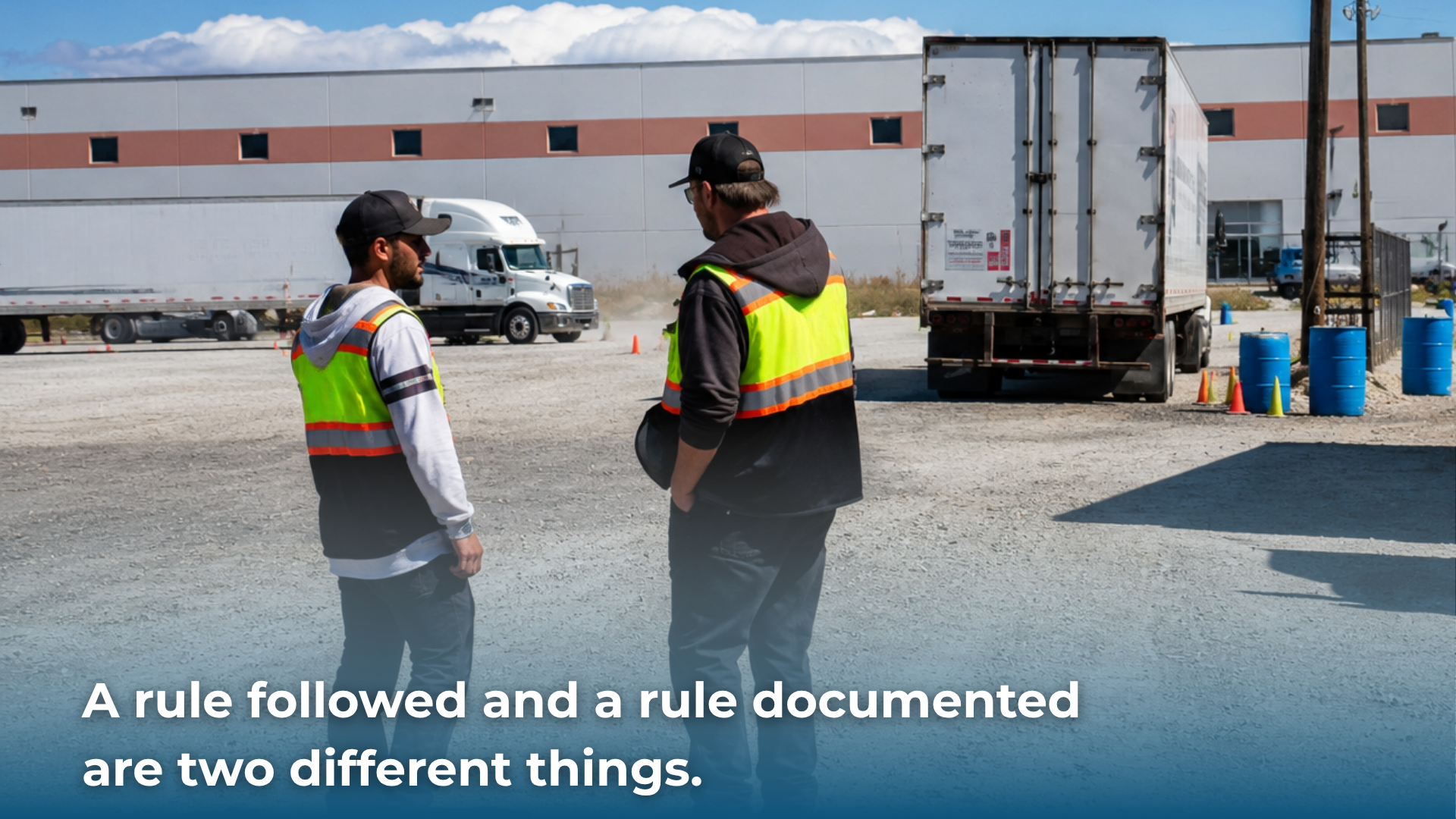
Most schools keep the trainer and examiner separate every single time. The owner would swear to it, and they would be telling the truth. The problem is that swearing to it is all they can do. When the proof of separation lives in people's memory of who was working that day, the school has compliance that evaporates the moment memory fades or staff move on. To an auditor, a rule followed and a rule documented are two different things, and only one of them counts.
The test of your documentation is simple. Pull a student file from eighteen months ago. Could a stranger look at that file and identify who trained the student and who examined them, on their own, in under a minute? If the answer requires someone to explain, the record is incomplete. The separation should be visible on the page itself.
What the paper trail actually requires
Two layers of documentation make the separation provable.
The first is the training history. Every training event should name the instructor who delivered it. The person, specifically. A student's file should read like a roster of everyone who worked with them: which instructor ran their range sessions, which one sat with them on the road, on which dates. The complete list of who touched the student's training is the foundation, because proving the examiner was independent starts with a record of everyone who trained the student.
The second is the testing record. The skills test should name the examiner just as clearly, tied to the date and the result. Put the two layers side by side and the separation proves itself. The examiner's name is absent from the training history, and the case is closed. Zero explanation, zero reconstruction, zero calls to the scheduler to vouch for who did what.
The gap usually hides in the training history
Here is where the documentation breaks down in practice. Testing records tend to be solid, because the test is a formal event with a form attached. Training records are where names go missing. Sessions logged with the instructor field blank. Files that show hours completed while staying silent on who delivered them. A student who worked with four instructors whose file mentions one.
Every unnamed session is a hole in your proof. A record that stays silent on who trained the student leaves the examiner's independence as an open question. The separation rule is only as provable as your session-level training records are complete.
Good records also prevent the mistake before it happens
There is a practical bonus to keeping the training history complete, and it shows up at scheduling time. The real risk in a busy school is a scheduler assigning next Tuesday's tests while working from an imperfect recall of who trained whom six weeks ago.
In CDL PowerSuite, every student record clearly shows who the student worked with, every session, from day one. So when it is time to schedule the skills test, the history is right there before the assignment gets made, and the student lands in front of an examiner who is clear to test them. The same documentation that proves the separation to an auditor afterward is what keeps the conflict out of the schedule in the first place. That is what good documentation does. It answers the question before it gets asked, and it stops the mistake before it gets made.
That is what good documentation does. It answers the question before it gets asked, and it stops the mistake before it gets made.
Want to see how CDL PowerSuite keeps trainer and examiner clearly identified on every student record? Let's talk.