
Why Entry-Level Drivers Are a Hard Sell and What Your School Can Do About It
June 29, 2026
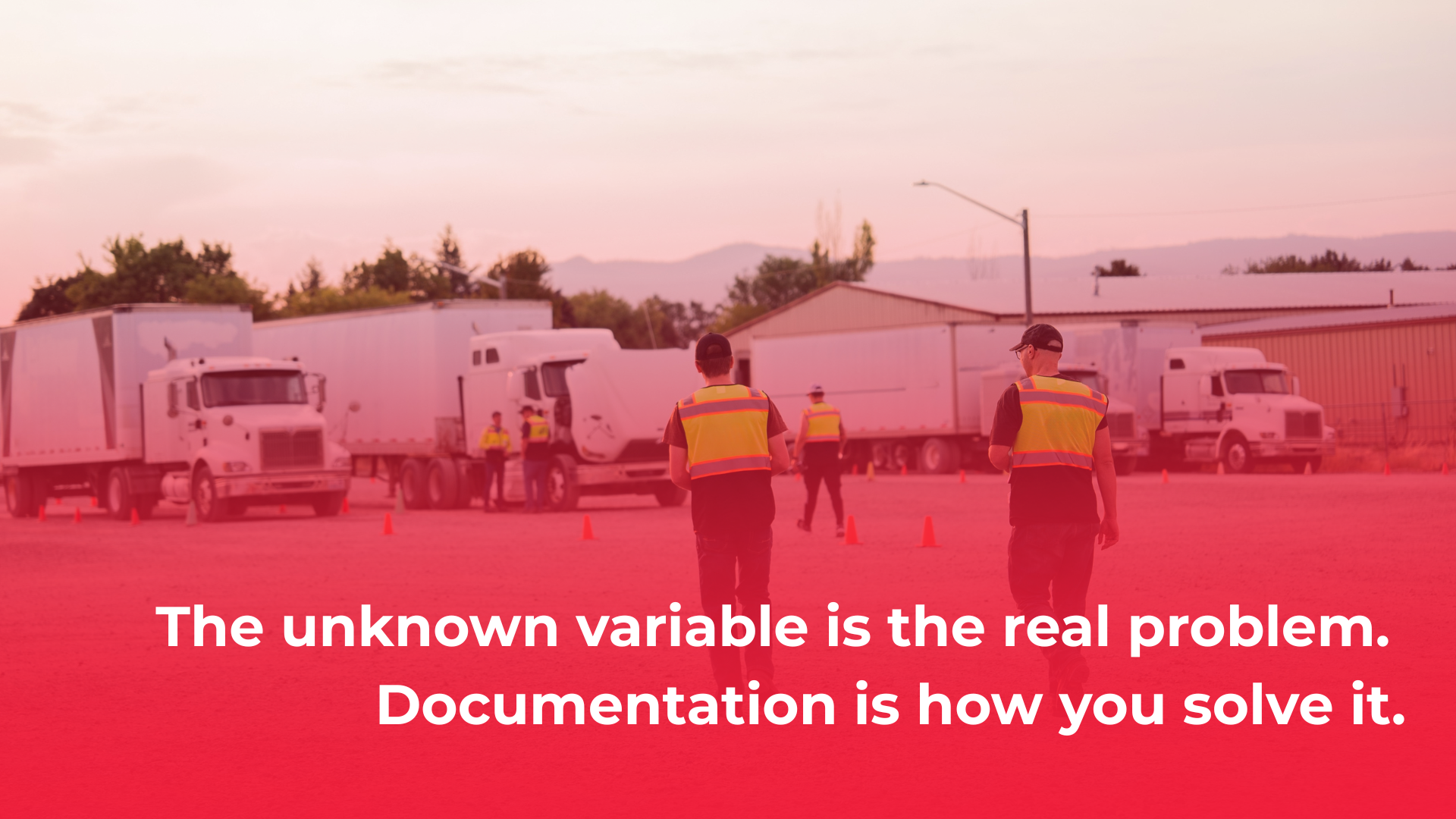
An experienced driver comes with a history. There is something to evaluate. An entry-level driver fresh out of training does not have that.
They are an unknown variable, and in today's insurance environment, unknown variables are expensive. That is why many insurance companies will not write a policy for a new driver without two years of experience. It is not arbitrary. It is the industry's way of saying, "We need something to go on before we take this bet."
That is the wall your graduates run into. And it has almost nothing to do with whether they can actually drive.
We were at TCA's Safety & Security Conference recently, and nuclear verdicts came up in nearly every conversation. Not as a policy discussion, but as a real, felt problem that carriers of every size were losing sleep over. Premiums keep climbing, verdicts keep growing, and every new driver on the road is a risk calculation that gets more expensive every year.
The carriers holding up best were not just buying more insurance. They were building better documentation.
What we took away from the workshop on audit readiness, specifically the session on how to prepare for DOT and FMCSA compliance reviews, was that the fleets that could walk into a compliance review with a complete, organized record of how their drivers were trained and assessed were the same ones their underwriters were treating differently at renewal.
The numbers give that pain some shape.
Nuclear verdicts jumped 52% in a single year, with the median award sitting at $51 million. When one bad outcome can threaten the financial survival of a small carrier, a new driver without a documented training history is a gamble that a lot of fleets will not take, regardless of how badly they need the capacity.
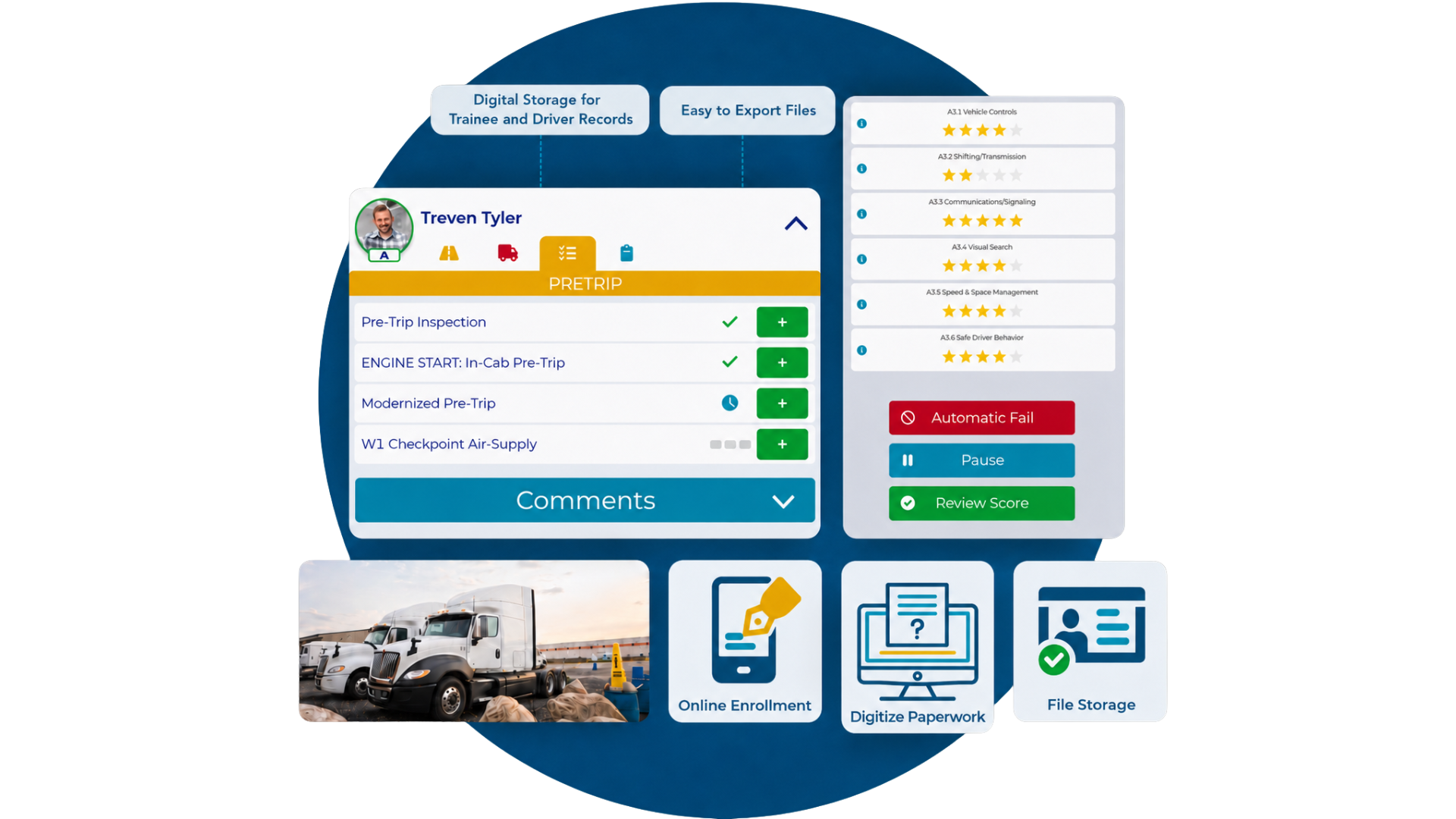
Who is this person behind the wheel, and what do we actually know about them?
That is what a carrier's underwriter wants to know before putting a new driver on a policy. It is the same thing an experienced hire's record already answers. A CDL answers the question of whether they passed a test on a given day. It does not show where they started, what they struggled with, how they progressed, or whether the instructor who signed off was documenting against a standard or going on instinct. That gap is what keeps the unknown variable unknown.
The schools whose graduates are getting hired are the ones changing that.
They are sending graduates out with something behind the license: a record that shows how the student performed across each skill area, where they needed work, when they improved, and a dated, signed assessment that ties back to the specific requirements they were trained against.
That file does not eliminate the unknown completely, but it replaces a blank page with something a carrier can actually evaluate. It gives the underwriter something to go on. And in a market where two years of experience is the industry's default minimum, a school that can hand over a documented training history is giving its graduates a fighting chance at getting hired before they have ever turned a wheel on the job.
Proficiency documentation is more than a compliance topic. It is becoming a placement topic.
The schools that treat it as a placement topic are the ones whose graduates have an easier time getting hired, not because they claim their students drive better, but because the proof of how well they drive travels with them.
The litigation environment is not going to ease up. Insurance is not going to get cheaper. And carriers that desperately need drivers still have to weigh every new hire against what a single bad outcome could cost them.
Your training program controls what your graduates show up with.