
Why Record Accurate Time and Attendance During a CDL Training Program?
Jason Boudreau • January 29, 2025
Tracking attendance and the number of hours students spend in your CDL school is essential for operational success and passing an FMCSA audit. While the Federal Motor Carrier Safety Administration (FMCSA) does not mandate a minimum number of training hours, it requires that training providers cover all topics in the curriculum and assess each student’s proficiency. This makes accurate attendance tracking vital for documenting when training activities were performed and how long they took. Proper time tracking also ensures students meet state or funding source requirements, which may include minimum hours.
Key Categories to Track
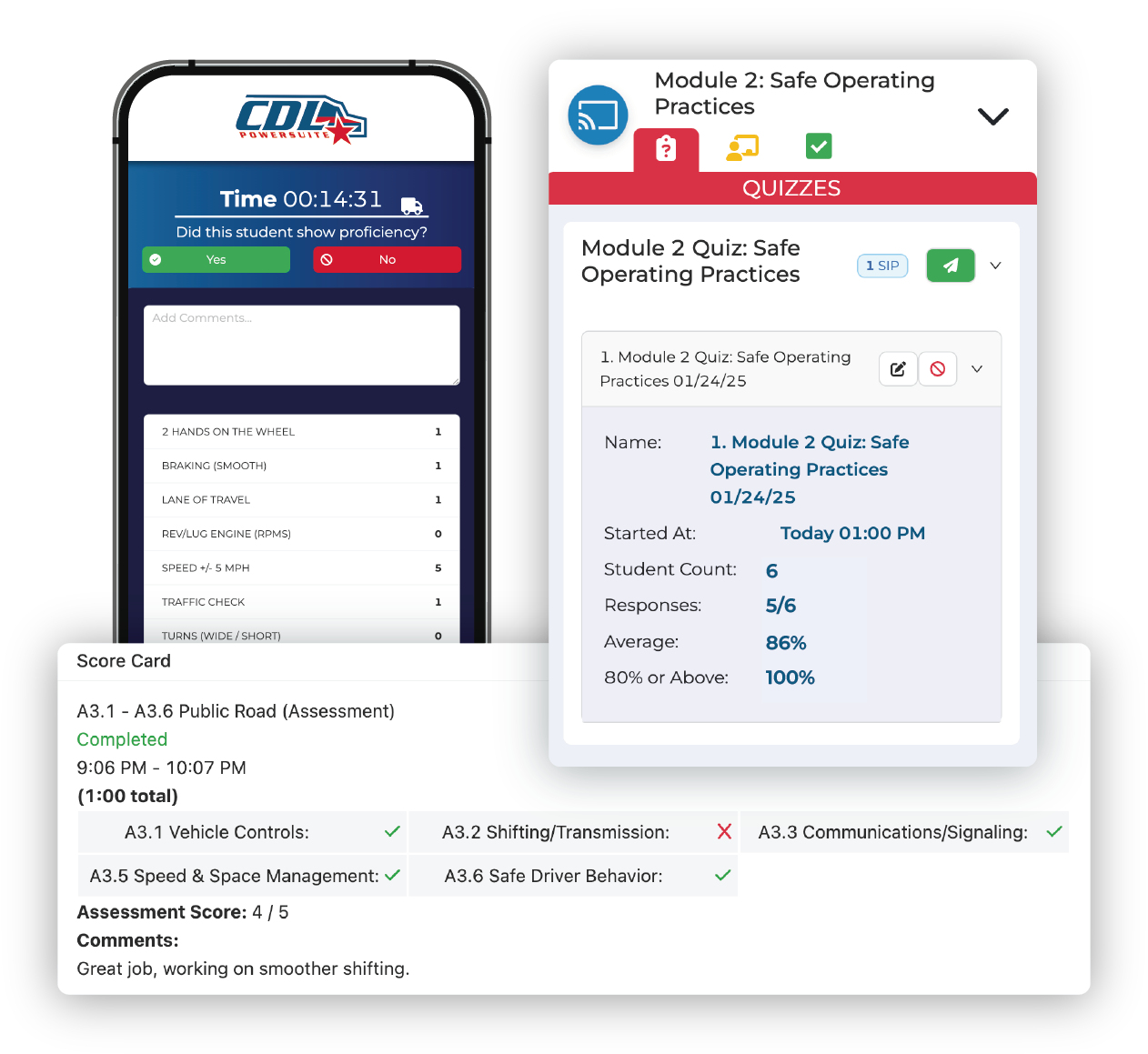
To ensure compliance and provide detailed reporting, CDL schools should track the following categories:
- Road Time:
- Documenting BTW time is essential for compliance with FMCSA’s proficiency-based standards.
- Range Time:
- Tracking time spent on closed-course practice offers a fuller picture of student training.
- Classroom Time:
- Many states and funding programs require a specific number of classroom instruction hours.
- Pre-Trip Inspections:
- Recording time spent on pre-trip inspections supports safety training and compliance.
- General Attendance & Observation Time:
- Logging daily attendance and total hours spent at a training facility on a daily basis, also known as observation time, ensures transparency and a complete overview of student activity.
Why Attendance Tracking Matters
Accurate records are essential for maintaining compliance with federal, state, and grant funding requirements. Many funding sources require verification that students meet hour thresholds, often 160 hours or more. Without precise documentation, it becomes difficult to demonstrate that these requirements are met.
Additional Reasons to Track Hours
- Program Effectiveness Evaluation:
- Hour tracking enables schools to evaluate the effectiveness of their training programs by analyzing time spent on different activities versus student outcomes.
- Liability Protection:
- Detailed attendance records can serve as evidence in case of disputes or audits, protecting the school from potential liabilities.
- Resource Allocation:
- Understanding how time is distributed across different activities allows schools to optimize resource allocation and scheduling.
- Accreditation and Recognition:
- Comprehensive hour tracking demonstrates professionalism and commitment to quality, which can enhance the school’s reputation and support accreditation efforts.
Conclusion
Attendance tracking is a critical aspect of running a successful CDL program. While the FMCSA does not enforce a minimum hour requirement, proficiency-based assessments and additional state or funding requirements necessitate thorough documentation. Furthermore, many employers prefer to hire graduates from programs with at least 120 to 160 hours of training. With the right systems in place, your school can focus on delivering high-quality training while ensuring compliance and transparency.
The CDL PowerSuite Solution
CDL PowerSuite Attendance Time Tracking Tutorial: