
How Lead Follow-Up Times Impact Enrollment Rates
Jason Boudreau • February 4, 2025
In the CDL industry, where potential drivers are eager to start their training and secure a stable career, following up with leads promptly is crucial. CDL schools that prioritize fast and effective follow-ups see significantly higher enrollment rates, as prospective students often choose the school that engages with them first and most consistently.
But just how much does response time matter? Research across multiple industries suggests that the faster you respond to a lead, the higher the likelihood of converting them into a paying customer. This principle applies directly to CDL schools, where individuals are making time-sensitive career decisions.
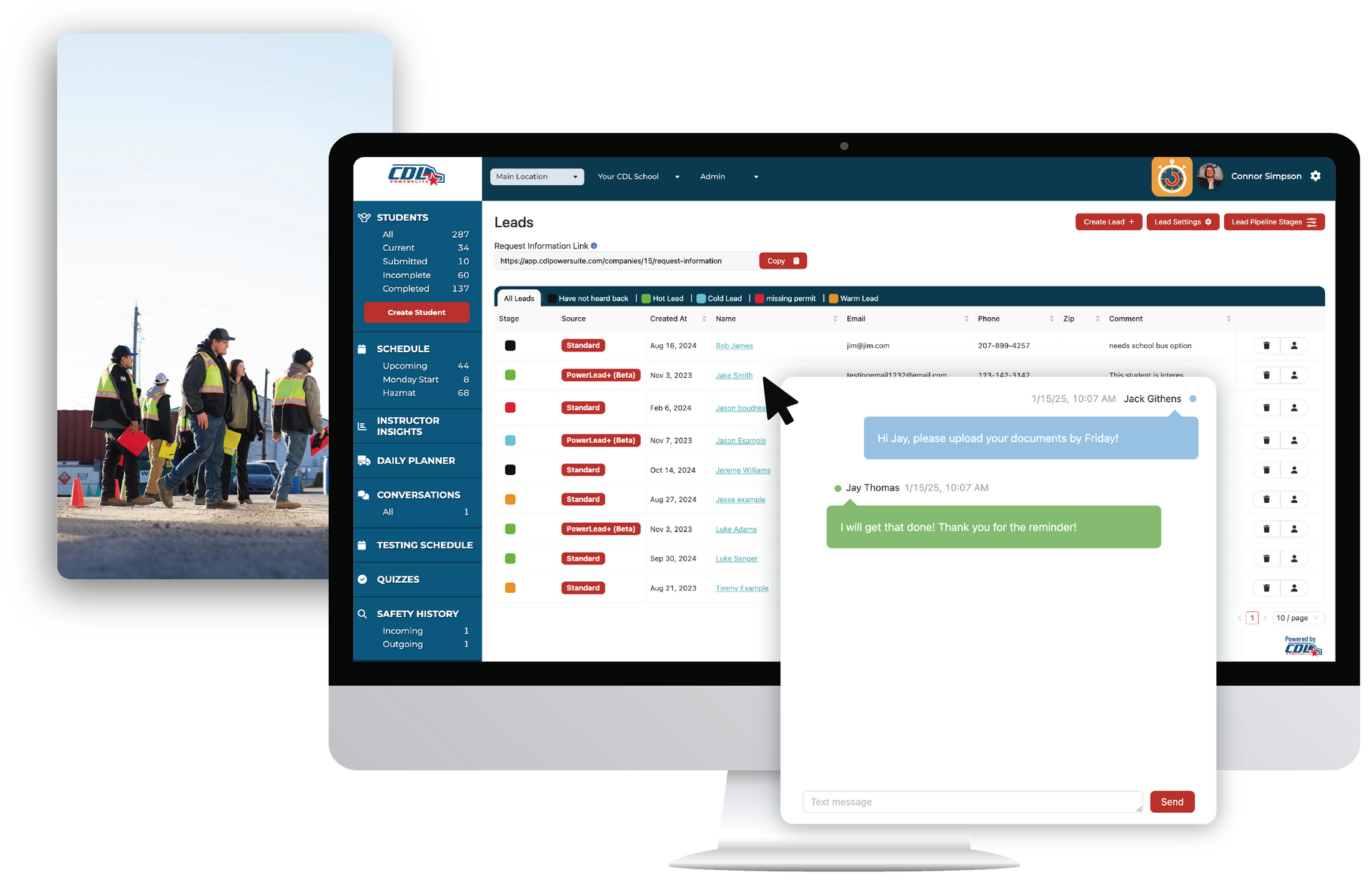
How Lead Response Time Impacts Enrollment Rates
Studies show a dramatic decrease in lead conversion rates as time passes after the initial inquiry:
- Within 5 minutes: Leads are
400% more likely to convert compared to later follow-ups.
- Within 1 hour:
Leads are still
10 times more likely to engage than those contacted after a day.
- After 24 hours:
The chance of converting drops by
50% or more.
- After 48 hours:
Most leads have already moved on to another school or lost interest.
Best Practices for CDL Lead Follow-Ups
- Respond Within 5-10 Minutes:
Leads contacted within 5 minutes are 400% more likely to convert. Prioritize speed to secure more enrollments.
- Use Multiple Channels: Call, text, and email—test different methods to see what works best for each lead.
- Follow Up More Than Once: If no response, try again within an hour, then the next day. Persistence increases conversions.
Conclusion
The data is clear—responding quickly dramatically increases the likelihood of securing a new student. CDL trainees are often comparing multiple programs, and the first school to engage with them has a much higher chance of earning their trust and commitment.
The CDL PowerSuite Solution
How to Source and Manage Leads: