The Importance of Proper Class Scheduling for CDL Schools

Jason Boudreau • January 23, 2025

Effective class scheduling is a cornerstone of successful CDL training programs. By ensuring the proper ratio of students, instructors, and equipment, CDL schools can create an environment where both staff and students thrive. Overcrowding or poor planning can lead to overwhelmed instructors, undertrained students, and lower pass rates. Proper scheduling ensures that each student receives the personalized training they need to become a safe, professional driver.


CDL training programs with a manageable student-to-instructor ratio produce better outcomes, including higher pass rates and improved job placement for graduates.
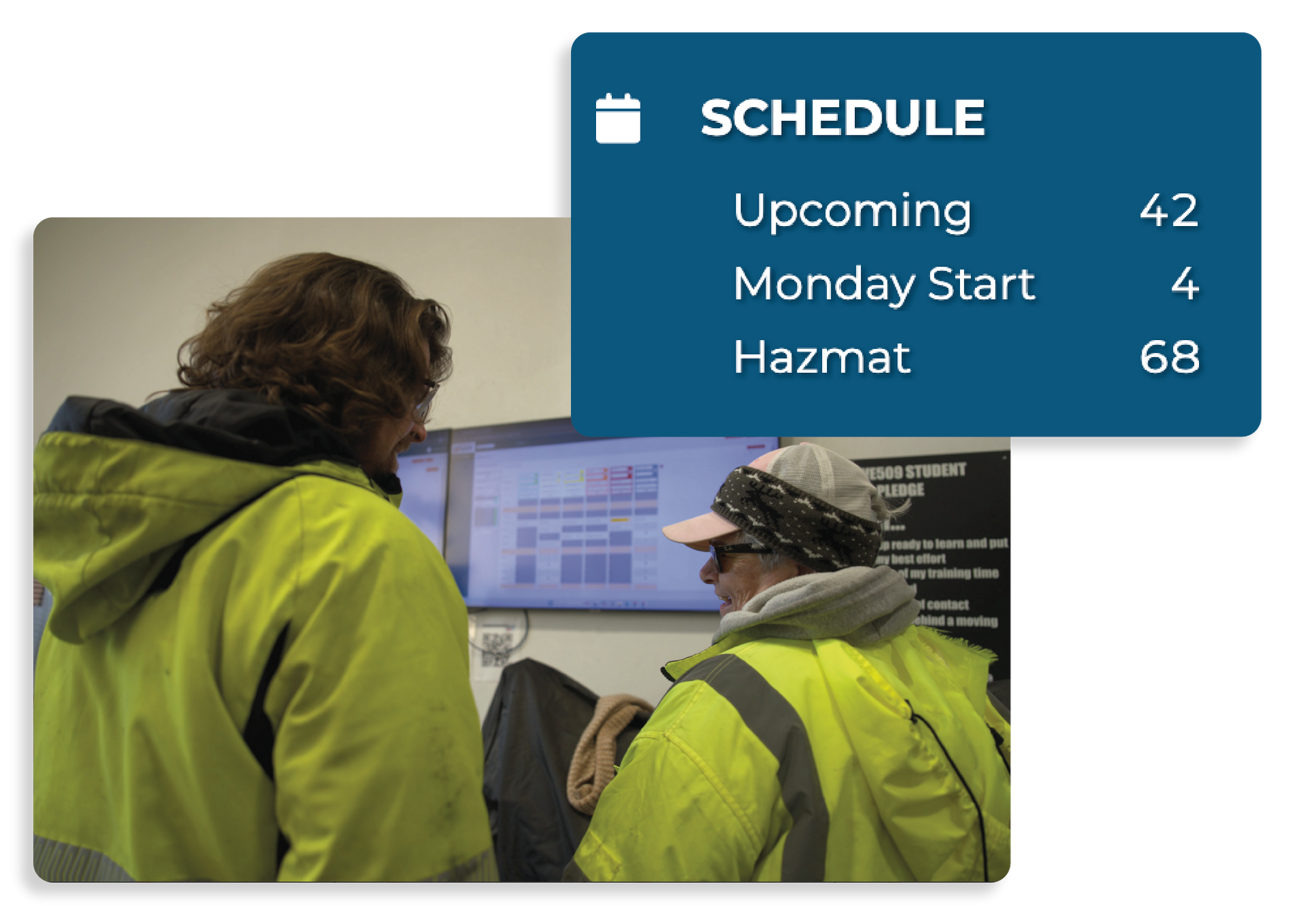
CDL PowerSuite Class Scheduling

Ideal Student-to-Instructor Ratio

  • 4:1 for Road Training
  • A maximum of 4 students per instructor for over-the-road, in-cab training.

  • 12:1 Range/Pre-Trip Training
  • A maximum of 12 students per instructor for field or yard training.

These ratios are designed to allow instructors to:

  • Provide personalized feedback and guidance.
  • Monitor and assess each student's progress effectively.
  • Maintain a safe and controlled learning environment.

Schools with smaller class sizes and proper scheduling can offer students more hands-on practice time, which is essential for building confidence and skill.

Creating a Clear Scheduling Plan

A clear plan and realistic expectations for the number of students a CDL school can accommodate are critical for success. Consider the following strategies:

  • Evaluate Capacity Regularly: Assess your school's physical space, staffing levels, and equipment availability to determine how many students you can train effectively.

  • Implement Enrollment Limits: Set enrollment caps to prevent overcrowding and ensure that each class size aligns with your resources.

  • Stagger Schedules: If possible, stagger training schedules to optimize the use of equipment and staff availability. For example, consider morning and afternoon shifts or weekday and weekend sessions.

  • Monitor Progress: Regularly review class outcomes, instructor feedback, and student performance to adjust schedules as needed.

The Ripple Effect of Proper Scheduling

When a CDL school invests in proper scheduling, the benefits extend beyond the classroom:

  • Higher Pass Rates: Well-trained students are more likely to pass their exams on the first attempt, enhancing the school's reputation.

  • Instructor Satisfaction: A manageable workload allows instructors to focus on teaching effectively and reduces burnout and increases the longevity of the instructors' employment.

  • Stronger Brand Reputation: Schools that consistently produce skilled, professional drivers build trust with local employers and the community, leading to increased enrollment and partnerships.

Conclusion


A well-structured class schedule is the backbone of a successful CDL training program. By maintaining optimal student-to-instructor ratios, implementing strategic scheduling practices, and regularly evaluating capacity, CDL schools can ensure a high-quality training experience. Proper scheduling not only enhances student learning and increases pass rates but also improves instructor satisfaction and strengthens the school’s reputation. Investing time and resources into thoughtful scheduling ultimately leads to better-trained drivers, safer roads, and a more successful CDL program overall.

The CDL PowerSuite Solution


How Upcoming Classes Are Managed:
August 17, 2026
Every certification your school submits to the Training Provider Registry rests on one thing: the instructor who signed off was qualified to do it. That makes instructor qualifications the single highest-stakes file in your building. When a student's record gets questioned, the school defends one certification. When an instructor's qualifications get questioned, every student that instructor ever signed off is in question at the same time. One gap, multiplied by hundreds of graduates. That is why instructor files deserve more attention than they usually get, and why "we know our people are qualified" is a sentence worth retiring. Knowing it and proving it are two different jobs. The second one is the one that counts. What qualified actually means The federal requirements come down to a few things. A behind-the-wheel instructor needs to hold a CDL of the same or higher class, with the endorsements needed for the vehicle they are teaching in, plus at least two years of experience driving that class of vehicle or two years of experience as an instructor. A clean licensing history matters too. An instructor whose CDL has been suspended, revoked, or cancelled in the recent past can be disqualified from teaching, even if their license looks valid today. Then the states add their own layer. Some require instructor licenses, background checks, or their own experience documentation on top of the federal floor. The federal rule is the minimum, and your state decides how much higher the bar sits. A school operating in more than one state can have different qualification requirements for instructors doing the same job. Qualified on paper, provable on demand Here is where schools get caught. The instructor genuinely is qualified. Twenty years behind the wheel, endorsements for everything, sharp as they come. But the file holds a photocopy of a CDL from three renewals ago and nothing else. When someone asks the school to prove the qualification, the proof is a phone call to the instructor asking them to bring their license in. A complete instructor file answers the question before anyone asks it. A current copy of the CDL with the right class and endorsements. Documentation of the experience that qualifies them, whether that is driving history or instructional history. The MVR on file and reviewed. State instructor credentials where they apply. Every requirement, matched to a document, sitting in one place. When an auditor asks, the answer takes minutes instead of a scramble. 
August 10, 2026
Every school knows the rule: the person who trains a student and the person who tests them have to be two different people. It is one of the oldest lines in third-party testing, and everyone in this industry can recite it. Knowing it happened is different from showing it happened Most schools keep the trainer and examiner separate every single time. The owner would swear to it, and they would be telling the truth. The problem is that swearing to it is all they can do. When the proof of separation lives in people's memory of who was working that day, the school has compliance that evaporates the moment memory fades or staff move on. To an auditor, a rule followed and a rule documented are two different things, and only one of them counts. The test of your documentation is simple. Pull a student file from eighteen months ago. Could a stranger look at that file and identify who trained the student and who examined them, on their own, in under a minute? If the answer requires someone to explain, the record is incomplete. The separation should be visible on the page itself. What the paper trail actually requires Two layers of documentation make the separation provable. The first is the training history. Every training event should name the instructor who delivered it. The person, specifically. A student's file should read like a roster of everyone who worked with them: which instructor ran their range sessions, which one sat with them on the road, on which dates. The complete list of who touched the student's training is the foundation, because proving the examiner was independent starts with a record of everyone who trained the student. The second is the testing record. The skills test should name the examiner just as clearly, tied to the date and the result. Put the two layers side by side and the separation proves itself. The examiner's name is absent from the training history, and the case is closed. Zero explanation, zero reconstruction, zero calls to the scheduler to vouch for who did what.