
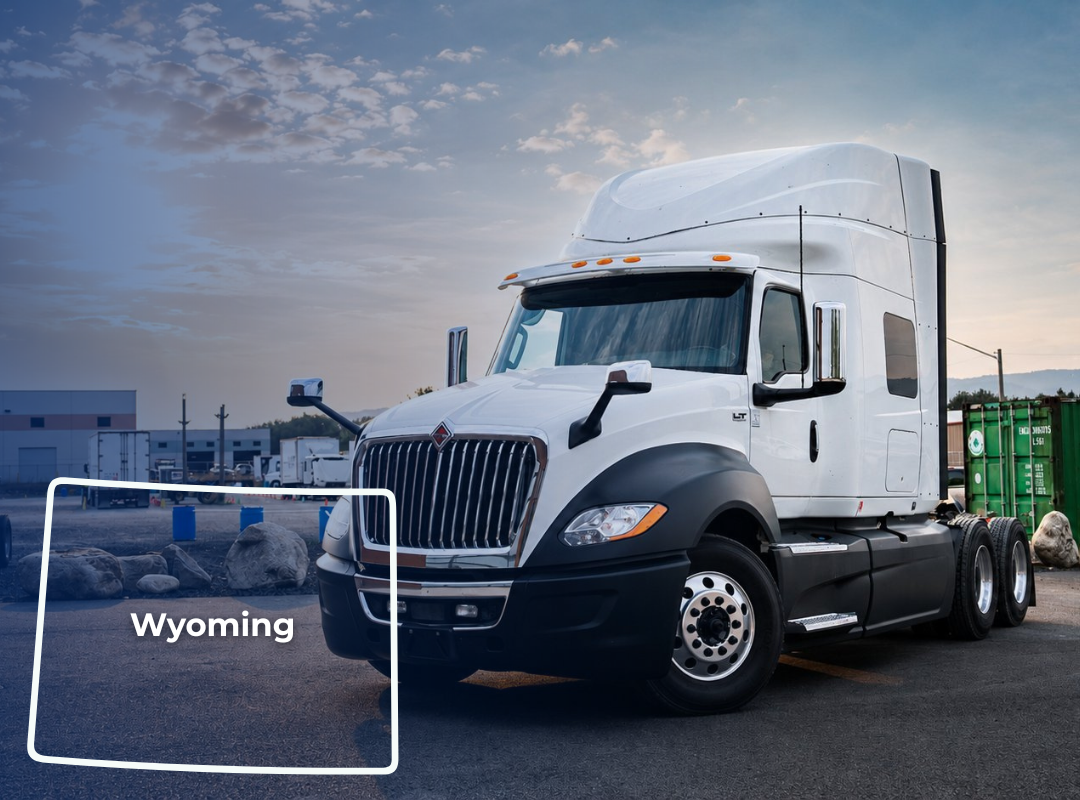
Wyoming CDL Trainer Requirements:
Learn the Wyoming CDL trainer requirements that matter most for compliance.
What, Why, When, and How to Stay Compliant in the State of Wyoming.
If you want to become a CDL trainer in Wyoming, or you already train drivers and want to tighten up compliance, this article is for you. In Wyoming, CDL training compliance can involve the federal Entry-Level Driver Training (ELDT) and Training Provider Registry (TPR) rules plus two state layers: Wyoming Department of Education private school licensing for post secondary proprietary schools, and WYDOT Driver Services rules for CDL testing and third-party testers. That matters because a trainer can be excellent behind the wheel and still create audit risk if the program misses licensing, reporting, instructor, or recordkeeping requirements.
What does a CDL trainer in Wyoming actually have to comply with?
At the federal level, Entry-Level Driver Training applies to people seeking a Class A CDL, Class B CDL, Class A or B upgrade, or a first-time passenger, school bus, or hazmat endorsement. To provide that training in compliance with federal law, the provider must be listed on FMCSA's Training Provider Registry, use the required curriculum under 49 CFR Part 380, use instructors who meet the theory and behind-the-wheel definitions in 49 CFR 380.605 as required by 49 CFR 380.713, and submit training certification records after completion through the TPR.
At the Wyoming level, oversight sits in two places. The
Wyoming Department of Education licenses private post secondary proprietary schools under
W.S. 21-2-401 through 21-2-407 and
WDE Rules Chapter 1. Section 1-9 states that no post secondary proprietary school may solicit students, do business in, or operate in Wyoming without first obtaining a private school license, and Section 1-5 defines that school as a business enterprise, operated for profit or nonprofit, that maintains a place of business in the state and offers courses of instruction to train or prepare people for a field of endeavor.
WYDOT runs the CDL credential, the knowledge and skills tests, and the third-party testing program under its own Chapter 1 driver licensing rules.
Why Wyoming CDL trainer compliance matters.
The reason compliance matters is simple: the training itself is only half the job. FMCSA requires providers to use written theory assessments, document behind-the-wheel proficiency, report completion records through the Training Provider Registry by midnight of the second business day, and retain required records for at least three years under 49 CFR Part 380.
Wyoming adds its own oversight. W.S. 21-2-401(c) and (d) put administration and enforcement of the licensing article with the Department of Education and direct it to establish minimum standards and provide for the investigation and evaluation of licensed schools. WDE Rules Chapter 1 Section 1-9(f) reaches further than the federal floor: records and accounts pertaining to student enrollment and progress are kept in good account and retained as permanent records. If your program also administers the skills test, WYDOT's third-party testing rules add a signed agreement and on-site inspections or audits by WYDOT or FMCSA at least annually. That means trainer compliance is not just personal compliance; it is operational compliance tied to the school or program as a whole.
When do Wyoming specific rules apply to a CDL trainer?
The WDE layer attaches to the school. Under Chapter 1 Section 1-5(i), a post secondary proprietary school is a business enterprise, for profit or nonprofit, that maintains a place of business in Wyoming and offers courses of instruction to train or prepare people for a field of endeavor. The same section reaches a business located outside Wyoming whose agent solicits students inside the state. Section 1-5(i)(i) then draws the lines that matter most to CDL programs: courses sponsored by an employer for the training and preparation of its own employees sit outside the definition, and so do schools, colleges, universities, and other institutions offering a post secondary degree, which are handled under WDE Chapter 30 instead. W.S. 21-2-401(a) reaches trade, correspondence, distance education, technical, vocational, business and other private schools, and the license application at Section 1-7 assumes a schedule of tuition, fees and charges and a refund schedule, so the layer is aimed at privately operated programs that charge for instruction.
The WYDOT layer attaches to testing. If your school wants to administer the CDL skills test itself, Chapter 1 Section 12(e)(i) requires it to be licensed with the WDE Private School Non-degree Program and to provide WYDOT with a copy of that license. The two layers are wired together: in Wyoming, the education license comes first and the testing authority is built on top of it.
So think in two layers. First, ask whether the training is federally ELDT-covered, because that layer applies to every entry-level training provider. Second, ask whether the program is a WDE-licensed private school and whether it will also test. If the answer to both is yes, the trainer and the program satisfy both layers at the same time. The two are also linked federally: 49 CFR 380.703(a)(5)(i) conditions TPR listing on being licensed, certified, registered, or authorized to provide training under the laws of any state where in-person training is conducted, so for a Wyoming school the WDE license is not only a state obligation, it is part of what keeps the federal listing valid. Under 380.703(a)(5)(ii), state qualification requirements otherwise applicable to theory instruction do not reach a provider offering that instruction only online.
How do you become a CDL trainer in Wyoming?
Inside the WDE license. Chapter 1 Section 1-7(i) requires a completed personnel data form for each director, supervisor, instructor, teacher, and agent with the school's application. Section 1-9(c) requires the education and experience qualifications of administrative and instructional staff to be such as will ensure students receive educational services consistent with the stated objectives for which those services were offered. Section 1-9(i) requires that the school's administrators, directors, owners, and instructors have not been convicted of fraud, moral turpitude, or other felonies, and have not participated in behavior that led to revocation of a school's license in another state or country.
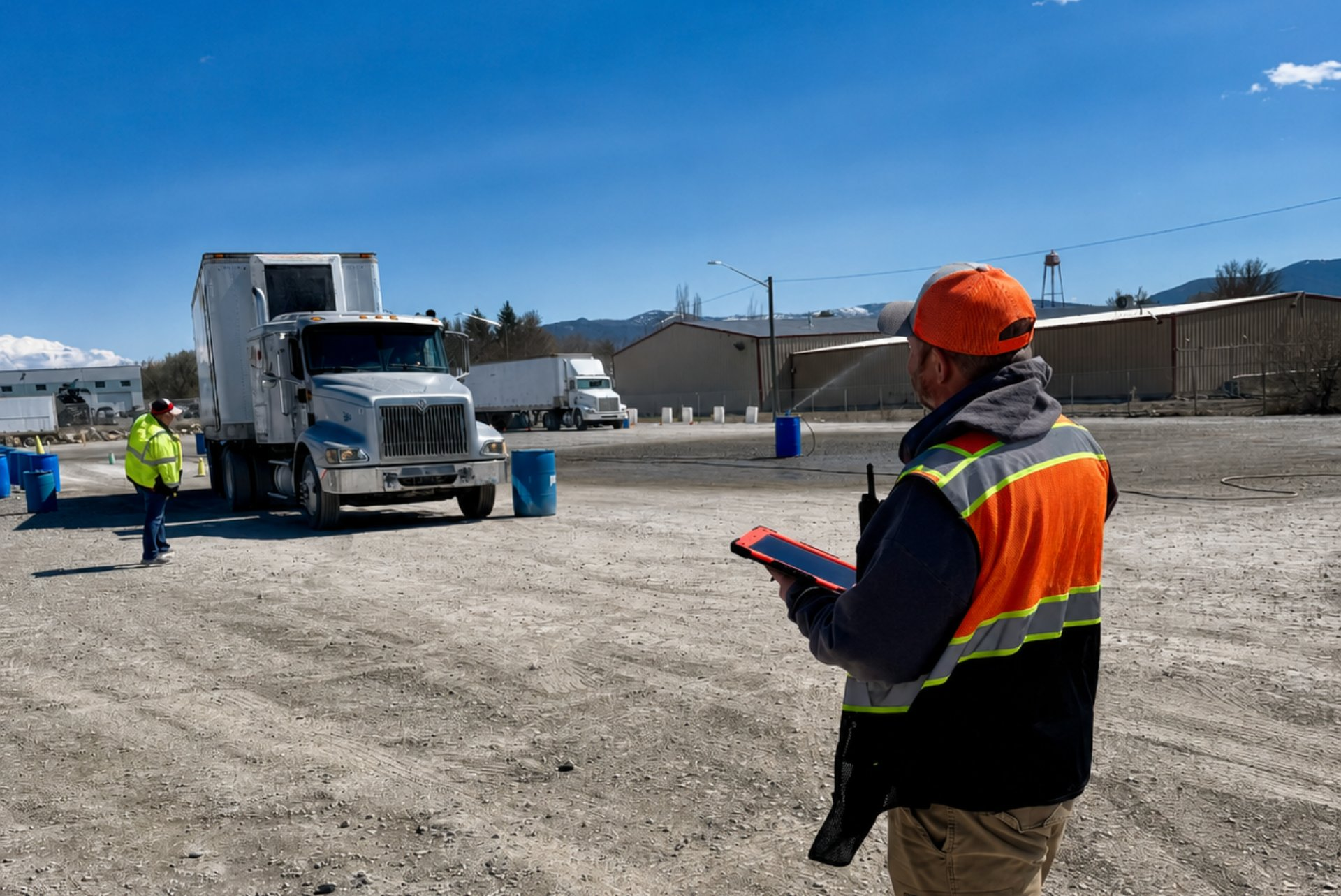
As a WYDOT third-party examiner. Chapter 1 Section 12(b) allows only employees who complete the required Class A and B Third Party Training Certification Program and whom the Department certifies to administer CDL skills tests, and holds those examiners to the same qualification and training standards as WYDOT's own examiners, with a certificate on file with the Department. Section 12(d) adds a current, valid Wyoming CDL of the type and class being tested, with no suspension, disqualification, revocation, or cancellation in the last five years, and a nationwide criminal background check with the results filed with the Department. An examiner conducts at least 10 tests on different applicants within one year to keep active status, and may not act as both the examiner and the trainer-instructor for the same skills test applicant. Section 12(e)(v) requires truck driving school examiners to recertify annually.
For federal ELDT, instructor standards stack on top.
49 CFR 380.605 defines the theory instructor and the behind-the-wheel instructor, and
49 CFR 380.713 requires providers to use them: the proper CDL class and endorsements, plus either two years of CMV driving experience in that class or endorsement, or two years of experience as a behind-the-wheel instructor, while also meeting applicable state instructor qualification requirements.
What does a Wyoming CDL trainer have to teach?
Federal ELDT is not a loose outline. FMCSA requires providers to follow the curriculum in 49 CFR Part 380 and use qualified instructors, proper facilities, and proper vehicles. ELDT applies to Class A, Class B, upgrade, passenger, school bus, and hazmat entry-level training pathways.
Wyoming's contribution is the approved course list. WDE Chapter 1 Section 1-9(a) states that a licensed school conducts only those courses listed on its licensing application documents, and that any significant change in course content is reported by letter to the Department within thirty days of the change. Section 1-7(e) requires a course outline for each course to be conducted to be filed with the application, and Section 1-5(f) defines curriculum as a set of courses offered in a logical sequence, of a nature and quality to reasonably assure that students develop the job skills and knowledge necessary for obtaining employment in the occupational area for which the instruction is offered.
How are Wyoming trainees evaluated?
Federally, the theory side must include a written assessment, and the trainee must earn an overall minimum score of 80 percent under 49 CFR Part 380. For behind-the-wheel training, instructors must evaluate and document proficiency in the required BTW skills. FMCSA does not impose a minimum number of federal theory or BTW hours for ELDT; the focus is on covering the required curriculum and documenting that the trainee is proficient.
Wyoming adds requirements at both ends of the course.
WDE Chapter 1 Section 1-9(d) requires the school to furnish each person at enrollment with its grading system, absence regulations, and rules of operation, and to publish standards of progress defining the minimum grades considered satisfactory, the conditions for interruption due to unsatisfactory progress, any probationary period, and the conditions for reentrance.
Section 1-9(e) requires that on completion the student is awarded a certified diploma or certificate indicating the education was satisfactorily completed, and Section 1-7(f) requires a sample of that certificate for each course with the license application. On the credential side,
WYDOT Chapter 1 Section 11(b)(ii) sets a minimum grade of 80 percent to pass the CDL knowledge test. The
October 2024 Wyoming CDL manual lists the skills test fee at
$80 plus a
$5 technology fee imposed on all CDL skills tests, and
WYDOT's testing page publishes the combined figure as $85.
What records does a Wyoming CDL trainer or school need to keep?
Under FMCSA's ELDT rules, training providers on the TPR must retain records including copies of trainees' CLPs or CDLs, instructor qualification documentation, instructor CDL and endorsement copies where applicable, and lesson plans. Those records must generally be retained for at least three years. FMCSA also requires providers to submit training certification information through the Training Provider Registry by midnight of the second business day after completion, including the total clock hours the trainee spent completing BTW training.
Wyoming's recordkeeping rule runs longer than the federal floor. WDE Chapter 1 Section 1-9(f) requires adequate records showing attendance, progress or grades, with standards relating to attendance, progress, and conduct enforced, and states that the records and accounts pertaining to student enrollment and progress are kept in good account and retained as permanent records. Section 1-7 also requires the school to file its enrollment contract form, attendance record form, tuition and fee schedule, and refund schedule with the Department. If the school administers the skills test, WYDOT Chapter 1 Section 12(a) requires schedules and testing scores, both pass and fail, to be transmitted through the Commercial Skills Test Information System, and Section 12(c) requires each skills test affidavit to be signed and dated within the validity period of the commercial learner's permit the applicant held at the time of the test, with affidavits not accepted after the CLP expires.
What about school-level compliance in Wyoming?
School-level compliance matters because instructors work inside a licensed program. A WDE private school license runs from July 1 of the year issued through June 30 of the following year under Chapter 1 Section 1-7, with the performance bond renewed yearly. WDE's own Chapter 1 application is captioned for that registration period and carries an Annual Renewal option alongside the initial application, so the license is applied for again each cycle. The application carries a $200 school license fee and $100 for each agent, plus the enrollment contract form, tuition and fee schedule, refund schedule, a course outline for each course, a sample completion certificate, the attendance record form, catalogs and advertising materials, and a personnel data form for each staff member. Section 1-7 also notes that the Wyoming Secretary of State will not issue or renew corporate registration without prior licensure by the Department.
The bond amount is where published sources differ, and it is worth checking before you bind or renew. WDE Chapter 1 Section 1-7(a) sets a tiered performance bond of $10,000 for an annual enrollment of ten students or fewer, $25,000 for eleven to twenty, and $50,000 above twenty, measured in full time equivalents. W.S. 21-2-405(a) provides that the bond for private schools shall be not more than $10,000, while WDE's own application materials ask for a flat $10,000 original performance bond or irrevocable standby letter of credit dated July 1 to June 30. That flat figure appears in both the 2023 Chapter 1 application checklist and the Chapter 1 application packet. Confirm the figure that applies to your school with the WDE Private School Licensing consultant. The same care is worth taking with the rule's internal citations, which still refer to W.S. 21-11-101 through 21-11-107 while the current statutes and WDE's own page use W.S. 21-2-401 through 21-2-407.
If the school will administer the skills test, WYDOT adds school-level items of its own. Chapter 1 Section 12(g)(i) requires every non-government third-party tester to file and maintain a $10,000 bond with the state to retain certification, Section 12(a) requires a signed third-party agreement and permits WYDOT or FMCSA to conduct random examinations, inspections, and audits with or without notice, with on-site inspections or audits at least annually, and Section 12(e) bars any fee for administering the skills test beyond the fees and tuition WDE allows.
Who a third-party examiner may test is described differently in three WYDOT sources, and the difference matters to a school. The rule at
Chapter 1 Section 12(e)(iii) states that third-party examiners shall test only individuals registered as students with schools licensed to act as third-party testers.
WYDOT's CDL Testing page describes examiners as allowed to test their employees, volunteers, or students. The
October 2024 CDL manual states that examiners may administer the skills test only to their employees and not to the general public. Confirm with WYDOT Driver Services at cdl@wyo.gov which formulation applies to your program before you rely on any of them.
What are common Wyoming CDL compliance mistakes?
- Soliciting students or opening a private, tuition-charging program before the WDE license is issued, when Chapter 1 Section 1-9 conditions soliciting and doing business on holding it first.
- Adding or reshaping a course without reporting the change to WDE by letter inside the thirty days Section 1-9(a) allows.
- Treating ELDT like an hour-counting exercise instead of a documented curriculum-plus-proficiency requirement.
- Letting the same person serve as both trainer-instructor and skills test examiner for the same student, which WYDOT Chapter 1 Section 12(d) prohibits.
- Purging student enrollment and progress records on a three-year cycle when WDE Section 1-9(f) treats them as permanent records.
- Letting trainer qualifications live in people's heads instead of in the personnel files and instructor documentation that can be produced during a review.
Final takeaway.
Being a CDL trainer in Wyoming is not just about teaching safe driving. It means operating inside a compliance structure that includes federal ELDT rules, TPR reporting, Wyoming Department of Education licensing for private schools, and WYDOT third-party testing rules on top for programs that give the skills test themselves. The trainers and programs that stay out of trouble are usually the ones that build documentation, instructor files, training logs, and completion workflows before they scale.
Compliance disclaimer.
This article summarizes public Wyoming Department of Education private school licensing statutes and rules, Wyoming Department of Transportation driver licensing rules, and FMCSA Training Provider Registry and ELDT materials for general information, current as of August 2026. Applicability can vary by training model, provider type, and whether your program is school-based, employer-based, or government-run, so Wyoming providers should verify current requirements with the Wyoming Department of Education and WYDOT before relying on this summary.