
Minnesota CDL Trainer Requirements:
Learn the Minnesota CDL trainer requirements that matter most for compliance.
What, Why, When, and How to Stay Compliant in the State of Minnesota.
If you want to become a CDL trainer in Minnesota, or you already train drivers and want to tighten up compliance, this article is for you. In Minnesota, CDL training compliance can involve both the federal Entry-Level Driver Training (ELDT) and Training Provider Registry (TPR) rules and the Minnesota DVS rules for commercial driver training schools and instructors. That matters because a trainer can be excellent behind the wheel and still create audit risk if the program misses licensing, reporting, instructor, or recordkeeping requirements.
What does a CDL trainer in Minnesota actually have to comply with?
At the federal level, Entry-Level Driver Training applies to people seeking a Class A CDL, Class B CDL, a Class A or B upgrade, or a first-time passenger, school bus, or hazmat endorsement. To provide that training in compliance with federal law, the provider must be listed on FMCSA's Training Provider Registry, use the required curriculum under 49 CFR Part 380, use qualified instructors under 49 CFR 380.605, and submit training certification records after completion through the TPR.
At the Minnesota level, the Department of Public Safety, Driver and Vehicle Services (DVS) regulates commercial driver training schools and their instructors under
Minnesota Statutes 171.33 to 171.41 and
Minnesota Rules chapter 7411. Minnesota's trigger is money, not headcount.
Minn. Stat. 171.33, subd. 1 defines a commercial driver training school as
a business enterprise that charges a fee for the education and training of persons to drive motor vehicles, or to prepare an applicant for a state driver's license examination. There is no minimum number of students. A program that meets that definition must hold a DVS school license before instruction begins under
Minn. Stat. 171.34 and
Minn. R. 7411.0210, and every person who teaches or supervises students must hold a DVS instructor license under
Minn. Stat. 171.35.
Why Minnesota CDL trainer compliance matters.
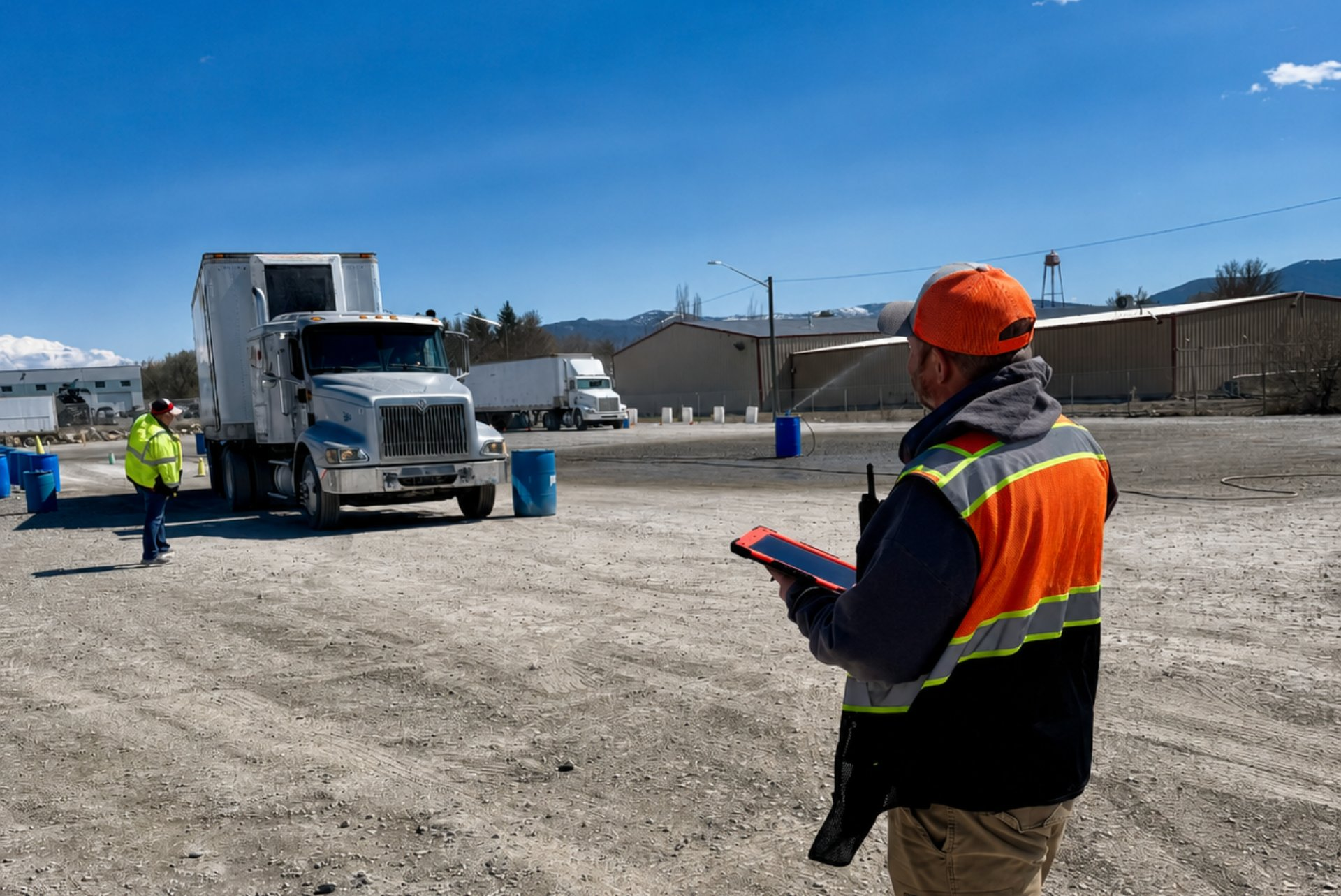
The reason compliance matters is simple: the training itself is only half the job. FMCSA requires providers to use written theory assessments and document behind-the-wheel proficiency under 49 CFR 380.715, to report completion records through the Training Provider Registry by midnight of the second business day under 49 CFR 380.717, and to retain required records for at least three years under 49 CFR 380.725. When a program gets audited, the biggest failures usually come from missing proof, not missing instruction.
Minnesota adds its own oversight, and in two places it is stricter than the federal floor. DVS or an authorized representative inspects school facilities and equipment and examines instructor applicants. Program records must be kept for at least five years, held in Minnesota at the program's administrative office, and made available for inspection by the commissioner during reasonable business hours under Minn. R. 7411.0280. Curriculum and student contracts are approved by DVS before they can be used, and both the school license and each instructor license expire one year from the date of issue. That means trainer compliance is not just personal compliance; it is operational compliance tied to the school or program as a whole.
When do Minnesota specific rules apply to a CDL trainer?
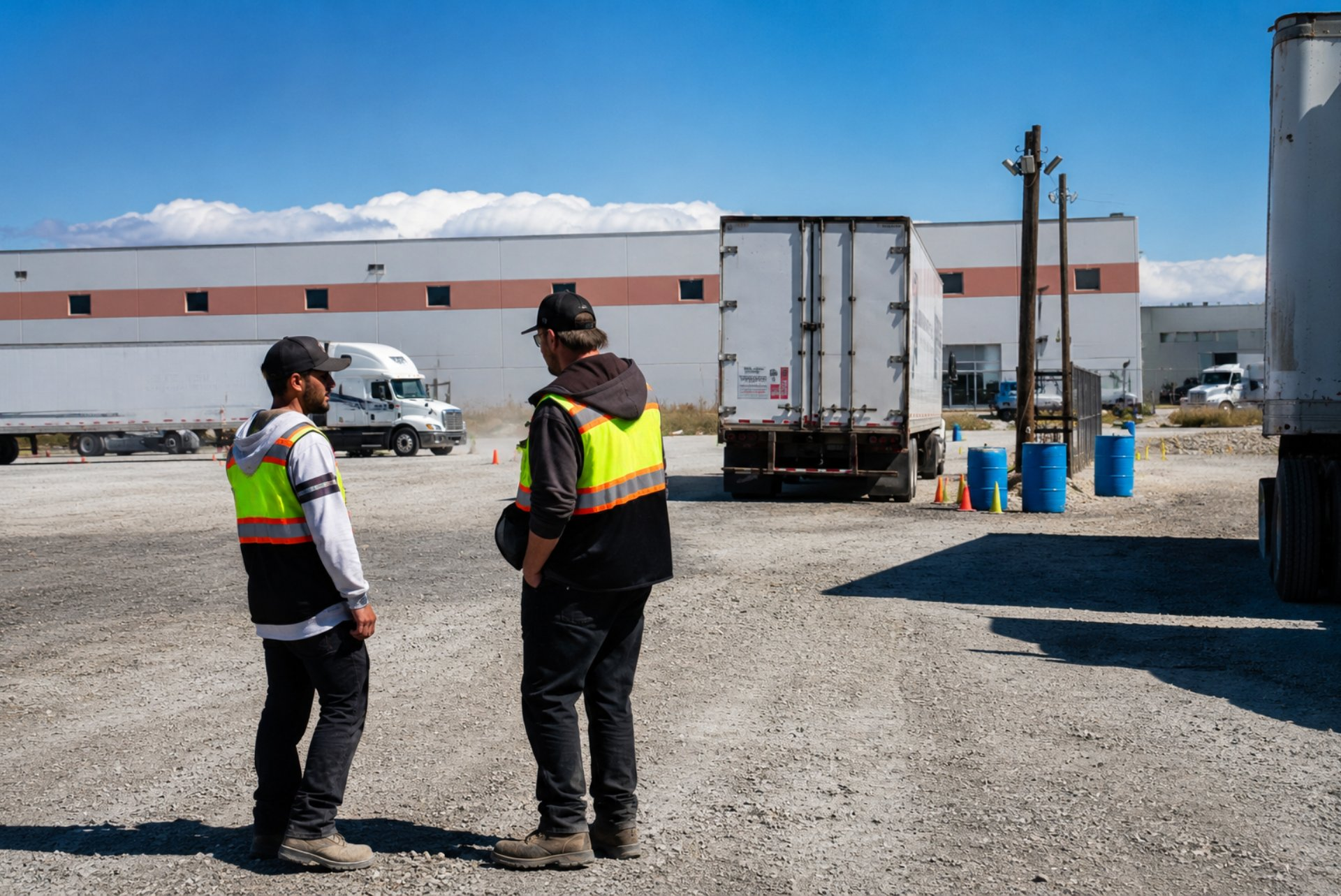
There is no student-count threshold. Under Minn. Stat. 171.33, subd. 1, the state layer attaches as soon as a business charges a fee for CDL instruction, whether that is one student or one hundred.
The exemptions are set out in Minn. Stat. 171.39. Sections 171.33 to 171.41 do not apply to a person giving driver training lessons without charge, to employers maintaining driver training schools without charge for their employees only, to a home school, or to schools or classes conducted by colleges, universities, and high schools as part of the normal program for those institutions. Minn. R. 7411.0210, subp. 6 adds the detail for postsecondary institutions: a college or university driver education program is exempt from licensure if the instruction is part of the institution's normal program or curriculum, the institution directly regulates or administers it, the institution insures or indemnifies program activities, and it does not provide instruction to anyone under 18.
So Minnesota trainers should think in two layers. First, the federal ELDT and TPR layer applies to every entry-level driver training provider, including public colleges and employer in-house programs. Second, the DVS school-licensing and instructor-licensing layer applies to licensed, private, tuition-charging schools. A public institution teaching as part of its normal program, and an employer training only its own employees at no charge, sit outside the state layer and still sit inside the federal one. The moment a program charges a fee to anyone outside that exemption, the state layer attaches and both layers have to be satisfied at the same time.
The two layers are also linked in the federal rule, which is easy to miss. Under
49 CFR 380.703(a)(5), a training provider must be licensed, certified, registered, or authorized to provide training in accordance with the laws of any state where in-person training is conducted, and under
49 CFR 380.719 it must keep documentation of that state licensure to stay listed on the TPR. For a fee-charging Minnesota school, the DVS license is not only a state obligation. It is part of remaining eligible for the Registry. The one exception: state qualification requirements that would otherwise apply to theory instruction do not apply to providers that deliver theory only online.
How do you become a CDL trainer in Minnesota?
Minnesota licenses instructors individually, and the license is tied to the school that employs you. Minn. Stat. 171.35 requires an instructor license before anyone acts as an instructor, and requires DVS to run a criminal history and driver's license records check before issuing one.
The baseline qualifications are in Minn. R. 7411.0620. An instructor must be at least 21 years old, must have been a valid licensed driver for three years in Minnesota or another United States state, must hold a valid driver's license for the class of motor vehicle they intend to teach, and must have a high school diploma or the equivalent. Applicants submit a certified driving record and authorize an investigation with the Bureau of Criminal Apprehension and the FBI, with fingerprints and the FBI background check fee submitted with the application. A gross misdemeanor or felony conviction makes an applicant ineligible unless the commissioner determines the crime does not directly relate to the position, or the applicant shows competent evidence of rehabilitation and present fitness.
For CDL instruction specifically, Minn. R. 7411.0630, subp. 6 requires a commercial driver's license representative of the vehicle class used for instruction, plus documented competencies. Those include 3,000 hours within the last five years operating that class of vehicle, knowledge of federal and state law for the class, performance assessment, control of driving activities on the range, training route and range development, recordkeeping in compliance with state rules and federal regulations, and the ability to take control of the vehicle from the right passenger seat.
Then you test. Under Minn. R. 7411.0650, an applicant must pass a written test and a road test administered by the commissioner, plus an evaluation of instruction methods for the class of vehicle to be taught. Failing any part fails the entire test, and failing twice within six months means waiting six months to retest.
The application goes to the DVS Office of Driver Education on the Application for Driver Training Instructor's License (form PS36008) with a $50 fee payable to the Commissioner of Public Safety, signed by both the applicant and the school's authorized official. Under Minn. R. 7411.0655, the license is valid only while you are employed by that commercial driver training school, must be surrendered to the commissioner within ten days if that employment ends, and expires one year from the date it was issued. An instructor can hold separate licenses at more than one school at the same time.
For federal ELDT, instructor standards are separate and stack on top of Minnesota's requirements. Under
49 CFR 380.605, both theory and behind-the-wheel instructors generally must hold the proper CDL class and endorsements and have either at least two years of CMV driving experience in that class or endorsement, or two years of experience as a BTW instructor, while also meeting applicable state instructor qualification requirements.
What does a Minnesota CDL trainer have to teach?
Federal ELDT is not a loose outline. FMCSA requires providers to follow the curriculum in 49 CFR Part 380 and to use qualified instructors, proper facilities, and proper vehicles. ELDT applies to Class A, Class B, upgrade, passenger, school bus, and hazmat entry-level training pathways.
Minnesota layers
curriculum approval on top of that rather than publishing a state syllabus. Under
Minn. R. 7411.0410, a program submits all curriculum to DVS for approval at the time of application, cannot use a curriculum until the commissioner approves it, and must submit any change for approval before using it.
Minn. R. 7411.0515, subp. 4 sets what a class A, B, or C curriculum must contain:
the hours of instruction to be provided, a description of all classroom and laboratory content for every course and for individualized instruction, the course fee or hourly rate, and the instruction required under
Minn. Stat. 171.0701. Minnesota does not set a statewide classroom or behind-the-wheel hour minimum for class A, B, or C training. The approved curriculum sets its own hours, which is exactly why DVS reviews it in detail. Instruction also may not substantially duplicate any part of Minnesota's knowledge examination or the road or skills test, including state test ranges and routes, under
Minn. R. 7411.0435.
How are Minnesota trainees evaluated?
Federally, the theory side must include a written assessment, and the trainee must earn an overall minimum score of 80 percent under 49 CFR 380.715. For behind-the-wheel training, instructors must evaluate and document proficiency in the required BTW skills. FMCSA does not impose a minimum number of federal theory or BTW hours for ELDT; the focus is on covering the required curriculum and documenting that the trainee is proficient.
Minnesota does not add a separate state passing score or a state course-completion certificate for class A, B, or C courses. The certificate and letter-of-completion duties in Minn. R. 7411.0250 are written for class D and motorcycle students under 18. What Minnesota does require for CDL programs sits in the contract and the progress review: under Minn. R. 7411.0305, a class A, B, or C contract must specify the hours of instruction to be provided, describe the course or individualized instruction, and state the course fee or hourly rate, and when a contract expires the instructor evaluates progress with the student and determines how much further instruction is needed. If the instructor and the authorized official conclude the student cannot complete the instruction, the official must notify the commissioner in writing, and the program may continue instructing that student only with the commissioner's written authorization.
Minnesota also sets who can enroll. Under Minn. R. 7411.0325, a program cannot offer classroom or laboratory instruction to operate a class A or class C vehicle to a student who is not at least 18 years old and in possession of at least a class D driver's license, or to operate a class B vehicle to a student who is not at least 16 years old and holding at least a class D license.
Timing is the point that catches programs out. Federally, entry-level driver training is defined in
49 CFR 380.605 as training received from a provider listed on the TPR
before the trainee takes the CDL skills test for a first Class A or Class B CDL, an upgrade, or a passenger, school bus, or hazmat endorsement. On the state side, DVS states that the classroom or theory portion can be taken at any time, that the
behind-the-wheel portion cannot be taken before the commercial learner's permit is issued, and that BTW
must be completed within a year of the theory training. See the
DVS commercial learner's permit page.
What records does a Minnesota CDL trainer or school need to keep?
This is the section most compliance-focused readers care about. Under 49 CFR 380.725, training providers on the TPR must retain records including copies of trainees' CLPs or CDLs, instructor qualification documentation, instructor CDL and endorsement copies where applicable, lesson plans, and records of individual training assessments. Those records must be retained for at least three years from the date each record is generated or received. The same rule says plainly that the federal three years does not displace any state requirement prescribing a longer period, which matters in Minnesota. FMCSA also requires providers to submit training certification information through the Training Provider Registry by midnight of the second business day after completion, including the total clock hours the trainee spent completing BTW training, under 49 CFR 380.717.
Minnesota is stricter on retention. Under Minn. R. 7411.0280, a program must maintain the required records for at least five years and must keep an instruction record for every person enrolled, containing the person's legal first, middle, and last name, residence address, date of birth, the unique identifier of the contract or agreement, the date and number of hours of all instruction, and the type of instruction. The program also keeps a file of the original, subsequent, and renewal contracts for every person receiving instruction, maintains records in a businesslike manner using only standard abbreviations, makes records available for inspection by the commissioner during reasonable business hours, and reports the loss, mutilation, or destruction of records to the commissioner immediately by affidavit. Records must be available in Minnesota at the program's administrative office, and DVS must be told where they are kept and notified before that location changes.
Two more Minnesota-specific items. Student contracts must be approved by the commissioner before use, must carry an individual unique number or identifier, must be signed by the program's authorized official, and must exist in writing before any instruction is given, under Minn. R. 7411.0305. And the authorized official must file an annual report within 30 days after the close of the calendar year showing how many students enrolled and how many completed instruction the previous year, under Minn. R. 7411.0340. That enrollment number also drives the surety bond amount.
Worth noting for what is not here: Minnesota's driver training school statutes and rules do not require a human trafficking awareness course for commercial driver training schools, so a Minnesota program has no such course completion to document for DVS.
What about school-level compliance in Minnesota?
Even in a trainer-focused article, school-level compliance matters, because instructors work inside a licensed program.
License and fees. A commercial driver training school license application carries a $150 fee, and an instructor license application carries a $50 fee, under Minn. Stat. 171.36. All licenses expire one year from the date of issuance. Renewal applications go in at least ten days before expiration and are not accepted more than 30 days early, under Minn. R. 7411.0210. The license is not transferable, and a change of ownership requires a new application. A separate license is required for each additional permanent location where the program provides classroom or laboratory instruction and has exclusive use for 90 days or more.
Surety bond, scaled to enrollment. Under Minn. R. 7411.0275, a school posts a continuous surety company bond based on total students enrolled in the previous calendar year: $10,000 for 1–100 students, $20,000 for 101–500 students, and $30,000 for 501 or more. The bond is adjusted after the first year of operation and every two years at renewal. If the bond is canceled, the license is revoked automatically on the effective date of cancellation.
Facilities. The program must have a permanent administrative office located in Minnesota, with continuous and exclusive control of it for at least one year through ownership or lease, under Minn. R. 7411.0345. No permanent office or instruction location may be within 150 feet of a site where any part of a driver's license examination is administered. Under Minn. R. 7411.0355, a classroom must be at least 300 square feet, and a program offering class A or B instruction must provide a driving range of at least 90,000 square feet, plus another 45,000 square feet for each additional class A vehicle when more than two are used on the range at the same time. Each classroom instruction location must be approved by the commissioner before instruction begins, and DVS must be notified of the address, time, and date of each use of a temporary location.
Vehicles and insurance. Training vehicles must meet Minn. R. 7411.0850, and a program providing instruction in a class A, B, C, or D vehicle must carry at least $250,000 per person, $500,000 per accident, $100,000 property damage, and $40,000 for medical expenses, plus uninsured motorist coverage when any instruction runs on public streets, under Minn. R. 7411.0270. If the insurance is canceled, the license is revoked automatically. Vehicle inspection intervals differ by class, and this is one place where the DVS summary and the rule text do not line up. The DVS handout says to provide an inspection form for training vehicles more than six years old, while Minn. R. 7411.0850 requires annual inspection for a motorcycle or class D vehicle over six years old, annual inspection for a class A, B, or C vehicle over ten years old, and an inspection for any training vehicle after a reportable accident. Confirm with DVS which inspection they want on file for your fleet.
Two DVS documents are worth having open when you apply. The
Application for Driver Training School License (form PS36275) carries the $150 fee and must be resubmitted annually to renew, and the
Bond of Commercial Driver Training School (form PS30380) is where the three bond amounts are selected. Note that the DVS summary handout
Commercial Driver Training School, Instructor, and Vehicle Requirements is a November 2015 revision and points to the bond rule without restating amounts, so use the rule and the current forms rather than the handout for any figure.
What are common Minnesota CDL compliance mistakes?
- Assuming the state layer only applies to large schools. Minnesota's trigger is charging a fee, not a student count.
- Assuming an in-house program is automatically outside DVS oversight. The exemption covers employers training their own employees without charge. Charge for the training, or open it up beyond your own employees, and the exemption stops applying.
- Treating ELDT like an hour-counting exercise instead of a documented curriculum-plus-proficiency requirement.
- Keeping records for three years. Minnesota requires at least five, held in Minnesota at the administrative office and available for inspection.
- Using a curriculum or a student contract that DVS has not approved, or changing an approved curriculum without resubmitting it.
- Letting someone instruct before the DVS instructor license is issued, or after they leave the school the license is tied to.
- Missing the TPR reporting deadline after training completion.
- Letting trainer qualifications live in people's heads instead of in organized records that can be produced during a review.
Final takeaway.
Being a CDL trainer in Minnesota is not just about teaching safe driving. It means operating inside a compliance structure that includes federal ELDT rules, TPR reporting, and, for any program that charges a fee, DVS school and instructor licensing, DVS-approved curriculum and contracts, and five-year records. The trainers and programs that stay out of trouble are usually the ones that build documentation, instructor files, training logs, and completion workflows before they scale.
Compliance disclaimer.
This article summarizes public Minnesota Department of Public Safety, Driver and Vehicle Services materials, Minnesota Statutes sections 171.33 to 171.41, Minnesota Rules chapter 7411, and FMCSA Training Provider Registry and ELDT materials for general information. Applicability can vary by training model, provider type, and whether your program is school-based, employer-based, or government-run, so Minnesota providers should verify current requirements with DVS before relying on this summary.