
How To Achieve Best-in-Class CDL Training with Proficiency Training Modules and a Daily Training Planner
October 8, 2024

To truly achieve best-in-class CDL training, it’s essential to have the right tools and strategies in place that ensure your instructors can deliver the highest quality instruction while maintaining operational efficiency. As a CDL school owner, lead instructor, or administrator, you know that delivering exceptional training requires more than just an FMCSA ELDT complaint curriculum—it demands a structured, organized approach that allows instructors to focus on teaching while keeping compliance and scheduling seamless.
This is where Proficiency Training Modules and a Daily Training Planner from CDL PowerSuite come in. These tools provide a comprehensive solution that not only meets FMCSA ELDT requirements but also empowers instructors to tailor their lessons to each student, track student proficiency progress in real-time, and stay on top of daily operations without the stress of manual scheduling or communication challenges. Combined with SMS Communication, these features help create an engaging, efficient, and organized environment where students can thrive and instructors can operate at their best.
In this article, we’ll explore how these tools work together to elevate your CDL training program, helping you build a best-in-class training experience that delivers real results. Whether it’s ensuring students achieve proficiency, optimizing your daily training operations, or keeping everyone connected, CDL PowerSuite provides the solutions you need to streamline operations and empower your instructors.

FMCSA Compliant Proficiency Training Modules.
One of the most challenging aspects of running a CDL training program is managing logistics. From scheduling classes and instructors to ensuring that trucks, classrooms, and students are all in the right place at the right time, things can get overwhelming quickly. The Daily Training Planner in CDL PowerSuite simplifies this process by providing a central hub for managing everything related to your daily training operations.
How We Help:
Built-in ELDT Theory and BTW Training:
CDL PowerSuite’s Proficiency Training Modules come prebuilt with FMCSA-required ELDT Theory lessons and Behind the Wheel (BTW) proficiency training modules. Thanks to our eldt.com theory integration, theory lessons can be purchased at bulk discounts to ensure that students receive comprehensive training that covers all the essential training topics.
Behind-the-wheel training modules can be checked off at the training provider's discretion once the trainee has demonstrated knowledge and proficiency in both range and road. Schools no longer need to wonder if their training is FMCSA Compliant if you follow PowerSuite’s training curriculum—the groundwork is already laid out for you.
This not only saves time but also ensures that students are learning exactly what they need to demonstrate mastery and proficiency of basic maneuvers.
Customizable Content: CDL schools have different priorities, from specialized vehicle operations to other training standards or regulations. That’s why CDL PowerSuite allows you to fully customize the built-in modules. You can add extra lessons to focus on program, academy, or state-specific procedures, adjust modules to include advanced driving techniques or emphasize particular safety concerns. This flexibility means that while compliance is always maintained, the program can also cater specifically to the needs of your students and instructors.
Progress Tracking: Proficiency Training Modules include progress tracking, enabling instructors to monitor each student’s advancement through the lessons and curriculum. This feature allows instructors to immediately see where a student may need additional support or which areas they’re excelling in. This ensures that students are consistently demonstrating proficiency benchmarks and that instructors can intervene when necessary, giving students the best chance at success.
The ability to track progress helps improve instructional focus, leading to better student outcomes and ultimately creating more skilled drivers.
Why It's Important:
The combination of FMCSA-compliant pre-built modules, fully customizable lessons, and student/trainee tracking ensures that your training program remains flexible yet fully compliant, giving students the skills they need to succeed.
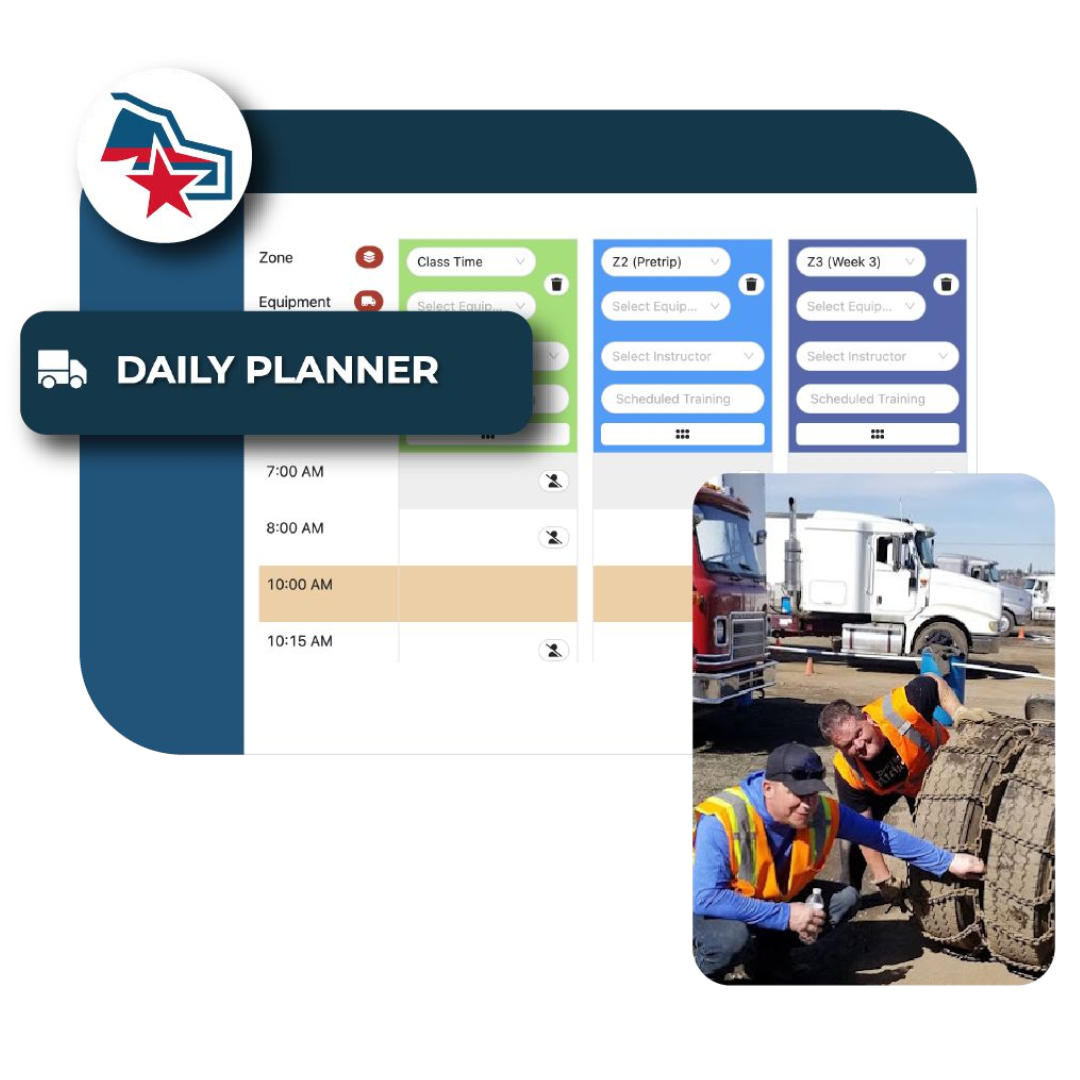
Daily Training Planner: Giving Instructors Control and Structure For Team Success.
One of the most challenging aspects of running a CDL training program is managing logistics. From scheduling classes and instructors to ensuring that trucks, classrooms, and students are all in the right place at the right time, things can get overwhelming quickly. The Daily Training Planner in CDL PowerSuite simplifies this process by providing a central hub for managing everything related to your daily training operations.
How We Help:
Centralized Scheduling:
The Daily Planner brings all aspects of scheduling under one roof. Instructors can see everything they need—class sessions, student availability, and CMV assignments or zones—all in one centralized platform.
This holistic view of daily operations reduces the risk of double-booking trucks, overloading instructors, or underutilizing classroom spaces. Instructors can also ensure that training materials are always available and properly scheduled for the right group of students.
By having a complete overview, you can quickly adjust for any scheduling conflicts or make proactive changes to improve the day’s efficiency.
Real-Time Updates: Training programs can be unpredictable—students may have to reschedule their lessons, instructors may need time off, or trucks may become unavailable for mechanical reasons. The real-time update feature in CDL PowerSuite’s Daily Planner allows instructors and administrators to react quickly to these changes. When adjustments are made—whether it’s rescheduling a test, modifying an instructor’s availability, or reallocating vehicle resources—everyone involved is instantly notified.
This reduces confusion and ensures that nothing falls through the cracks. Real-time updates help maintain an organized and fluid training environment, even when unexpected changes occur.
Resource Optimization: Efficient use of resources is key to running a cost-effective and professional CDL training program. The Daily Planner helps instructors optimize resources such as classroom space, trucks, and instructor time by offering a clear view of how these resources are allocated throughout the day.
By identifying underutilized or overbooked resources, the system helps you make adjustments that can prevent downtime and ensure that everything runs smoothly. Proper resource management not only improves operational efficiency but also reduces labor costs and maximizes the value of your available assets.
Why It's Important:
In essence, the Daily Training Planner gives instructors and administrators complete control over their schedules and resources, helping reduce inefficiencies and making sure that every training day is as productive as possible.

SMS Communication: Keeping Everyone in the Loop.
Efficient communication is key for any successful training program. Whether it’s keeping students informed about upcoming tests or notifying instructors of last-minute changes, CDL PowerSuite’s SMS Communication ensures that everyone stays in the loop and that communication gaps don’t disrupt the flow of training.
How We Help:
Instant Notifications:
In a busy training environment, things can change quickly. With CDL PowerSuite’s SMS Communication, instructors can instantly send out notifications about important updates—whether it’s rescheduling a test, notifying students about a new class session, or reminding everyone of upcoming deadlines.
This instantaneous communication reduces the chance of miscommunication and ensures that everyone is on the same page, leading to fewer missed assignments or no-show appointments.
Two-Way Communication:
Students and instructors often have questions, whether it’s regarding schedules, lesson content, or logistical issues. SMS Communication allows for two-way communication, enabling instructors and students to exchange messages directly. This feature provides students with a quick and easy way to ask questions, request changes, or get clarifications, while instructors can respond in real time, minimizing misunderstandings and ensuring smooth daily operations.
Boosted Engagement: SMS messaging also helps boost engagement by reminding students about upcoming sessions or deadlines. When students are regularly reminded of their responsibilities, they are less likely to miss important training sessions or forget assignments. This consistent engagement ensures that students stay on track and complete their training on schedule, improving overall program retention rates.
Why It's Important:
With SMS communication, instructors can efficiently stay in touch with students and staff, ensuring that everyone has access to real-time information and that communication bottlenecks are eliminated. This ultimately leads to a more engaged and organized training environment.
Conclusion: Elevate Your CDL Training Program with CDL PowerSuite.
Achieving best-in-class CDL training goes beyond teaching students or trainees—it’s about structuring and managing your program to ensure that every aspect of the training process runs smoothly and effectively to deliver the best CDL training possible.
CDL PowerSuite’s Proficiency Training Modules, Daily Training Planner, and SMS Communication offer a comprehensive toolkit for schools that want to deliver top-tier training while staying compliant and organized. By combining customizable, FMCSA-compliant modules with efficient scheduling and real-time communication tools, CDL PowerSuite helps your school run more efficiently, improve student outcomes, and keep everyone informed and on track.
Schedule a demo today and take your training program to the next level. CDL PowerSuite will transform the way you manage your training program.