Equip Your CDL Instructors for Success With Our Instructor Portal 2.0

October 30, 2024

CDL PowerSuite Training Resources

As a CDL training provider, lead instructor, or administrator, you understand that effective instruction is crucial to the success of any training program.


At CDL PowerSuite, we recognize that instructors are the backbone of any CDL training program, and we’ve worked hand in hand with CDL instructors in real training yards to create Instructor 2.0—a reimagined portal built from the training yard up.


Designed for effective training and real-time proficiency documentation at your fingertips, Instructor 2.0 provides a compliant and thoroughly documented training experience that empowers instructors and supports the success of every student.

Training Tools Right at Your Fingertips.

Instructor Portal 2.0 provides immediate access to compliant training materials, giving instructors the resources they need for every session. From planning lessons to managing day-to-day activities, the portal’s intuitive interface lets instructors create, schedule, and manage training sessions seamlessly. Automated notifications for upcoming sessions, student schedules, and resource needs keep everything organized and ensure each training day runs smoothly.

Trainee Proficiency Checklist:

With features like the Trainee Proficiency Checklist, instructors can ensure tasks like pre-trip inspections are efficiently logged with a simple yes/no evaluation, making it easy to track and confirm task completion. The checklist’s simplicity enhances accuracy, letting instructors focus more on teaching and less on administrative work.
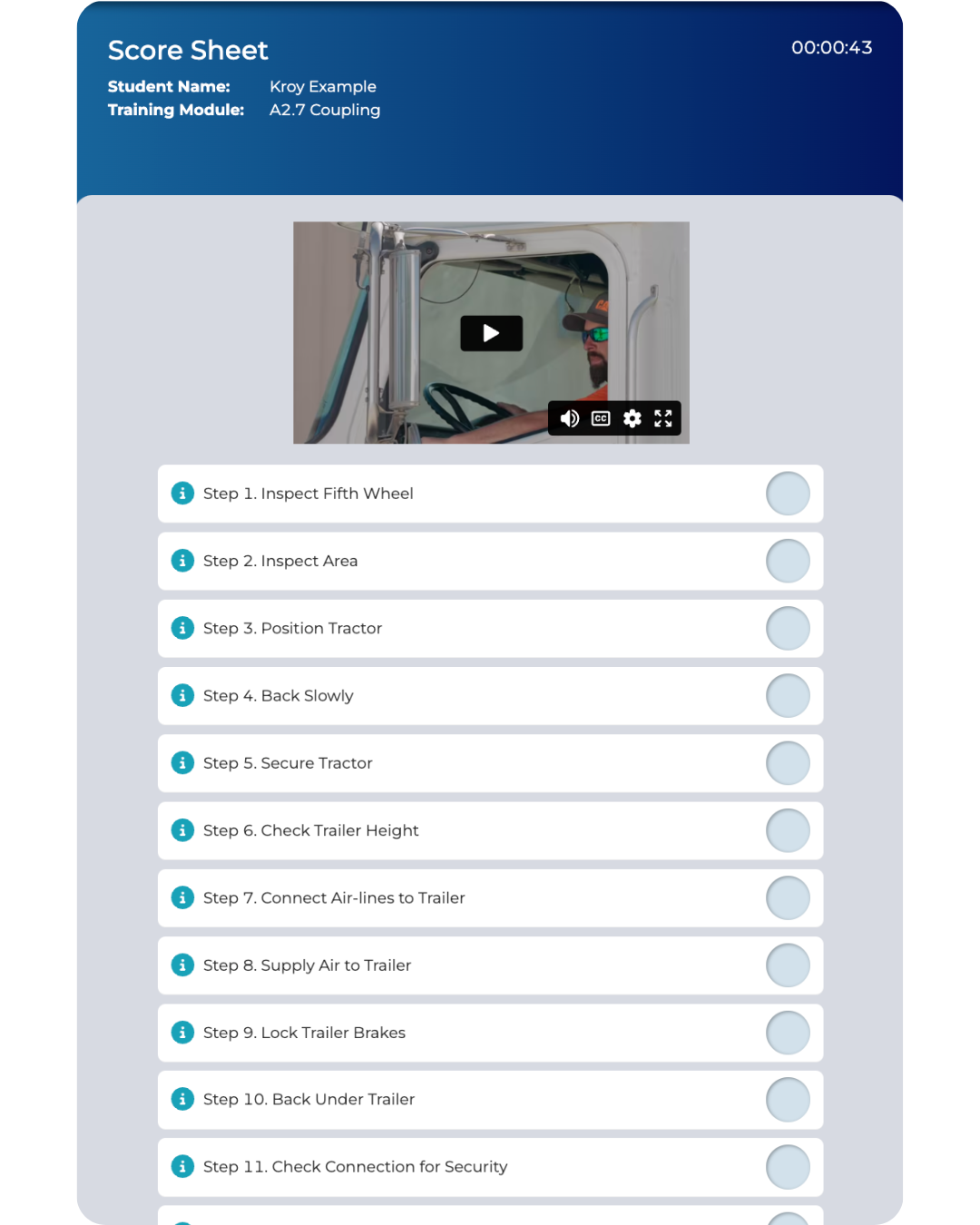
Entry Level Driver Training Trainee Proficiency Checklist.

Real-Time Proficiency Documentation.

Proficiency tracking is essential for both instructional effectiveness and compliance, and Instructor 2.0 delivers this capability in real time. The portal provides instructors with a live dashboard displaying each student's session details and training activities. Whether it’s documenting pre-trip inspections or monitoring on-road performance, instructors can log proficiency scores, attendance, and performance notes directly into the system.


Student Proficiency Star Ratings
Takes documentation to the next level by letting instructors evaluate trainee progress on a 1-5 star system. This not only fulfills FMCSA requirements but also offers a clear visual gauge of student development. With every entry, instructors can maintain a comprehensive, easy-to-read record that supports trainees’ growth and prepares them for each step of their training.
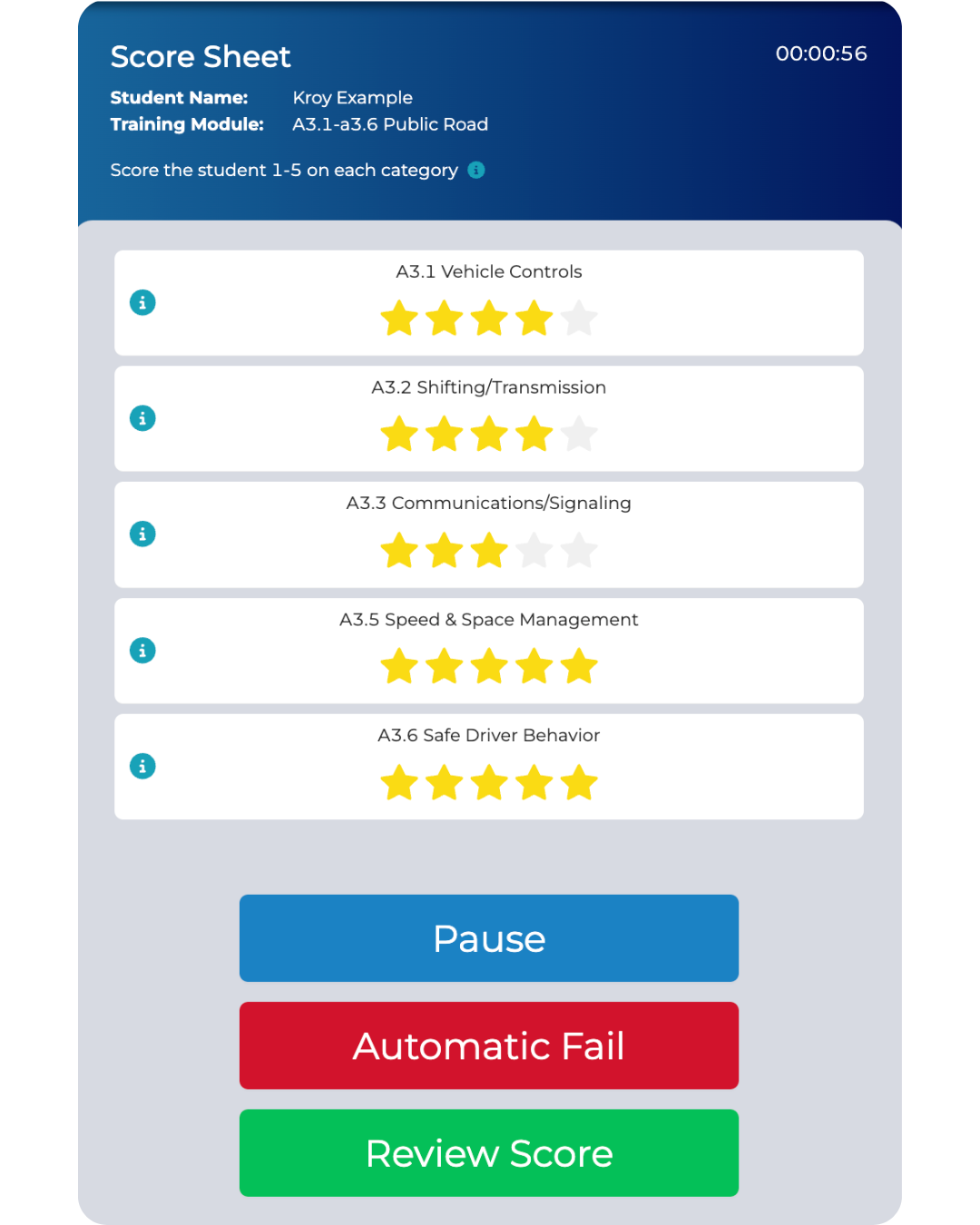
Student Proficiency Star Ratings shows A score sheet with buttons to indicate student proficiency

Compliance-Driven Student Progress Monitoring.

Instructor 2.0 doesn’t just track student progress; it provides a comprehensive toolset for monitoring and documenting each student’s journey through training. With a detailed view of student attendance, scores, and performance metrics, instructors can ensure that each trainee meets industry standards.


BTW State Test Evaluation:
To help trainees succeed, the BTW State Test Evaluation feature enables instructors to create and simulate state CDL test exams, preparing students for real-world testing conditions. This proactive approach to test preparation helps students build confidence and ensures they are well-prepared for the state CDL test.


By providing a fully documented, compliant training experience, Instructor 2.0 helps schools avoid the stress and hassle of manual record-keeping. This level of transparency and accountability enhances the training experience, reinforcing your school’s commitment to quality instruction and regulatory adherence.
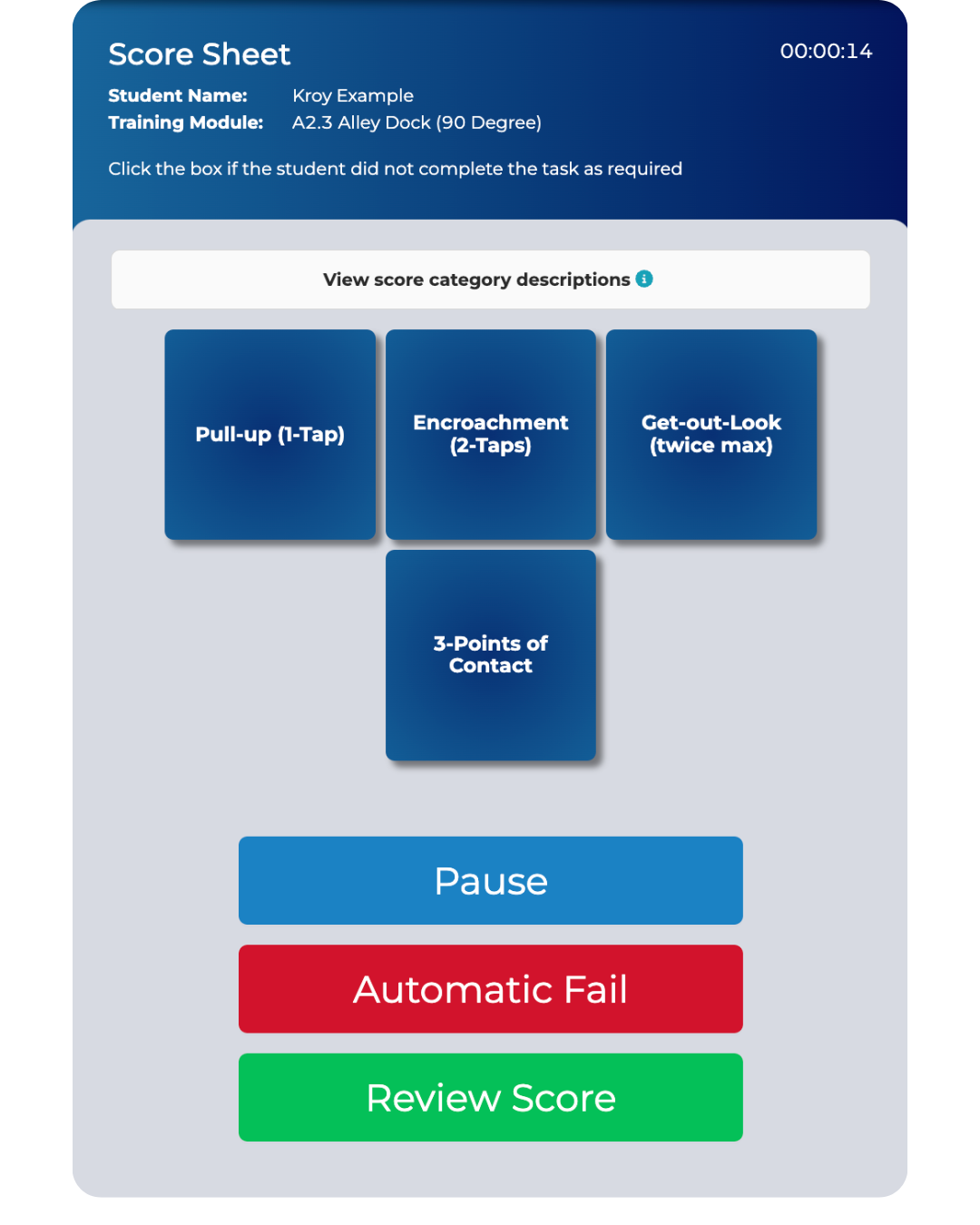
Behind The Wheel State Test Evaluation. A score sheet with a pause button , automatic fail button , and review score button.

The Future of CDL Instruction Is Here.

With Instructor 2.0, CDL PowerSuite is setting a new standard in CDL training. Built with feedback from real CDL instructors and refined in training yards, this portal is more than just a management tool—it’s a complete training solution designed to empower instructors and elevate training standards.


Give your instructors the tools they need to be the best educators possible, ensure compliance every step of the way, and create a documented, efficient training environment with Instructor 2.0. Schedule a demo today and experience firsthand how CDL PowerSuite is transforming CDL training for all training providers.

Schedule a demo today and take your training program to the next level. CDL PowerSuite will transform the way you manage your training program.
Request Demo
August 17, 2026
Every certification your school submits to the Training Provider Registry rests on one thing: the instructor who signed off was qualified to do it. That makes instructor qualifications the single highest-stakes file in your building. When a student's record gets questioned, the school defends one certification. When an instructor's qualifications get questioned, every student that instructor ever signed off is in question at the same time. One gap, multiplied by hundreds of graduates. That is why instructor files deserve more attention than they usually get, and why "we know our people are qualified" is a sentence worth retiring. Knowing it and proving it are two different jobs. The second one is the one that counts. What qualified actually means The federal requirements come down to a few things. A behind-the-wheel instructor needs to hold a CDL of the same or higher class, with the endorsements needed for the vehicle they are teaching in, plus at least two years of experience driving that class of vehicle or two years of experience as an instructor. A clean licensing history matters too. An instructor whose CDL has been suspended, revoked, or cancelled in the recent past can be disqualified from teaching, even if their license looks valid today. Then the states add their own layer. Some require instructor licenses, background checks, or their own experience documentation on top of the federal floor. The federal rule is the minimum, and your state decides how much higher the bar sits. A school operating in more than one state can have different qualification requirements for instructors doing the same job. Qualified on paper, provable on demand Here is where schools get caught. The instructor genuinely is qualified. Twenty years behind the wheel, endorsements for everything, sharp as they come. But the file holds a photocopy of a CDL from three renewals ago and nothing else. When someone asks the school to prove the qualification, the proof is a phone call to the instructor asking them to bring their license in. A complete instructor file answers the question before anyone asks it. A current copy of the CDL with the right class and endorsements. Documentation of the experience that qualifies them, whether that is driving history or instructional history. The MVR on file and reviewed. State instructor credentials where they apply. Every requirement, matched to a document, sitting in one place. When an auditor asks, the answer takes minutes instead of a scramble. 
August 10, 2026
Every school knows the rule: the person who trains a student and the person who tests them have to be two different people. It is one of the oldest lines in third-party testing, and everyone in this industry can recite it. Knowing it happened is different from showing it happened Most schools keep the trainer and examiner separate every single time. The owner would swear to it, and they would be telling the truth. The problem is that swearing to it is all they can do. When the proof of separation lives in people's memory of who was working that day, the school has compliance that evaporates the moment memory fades or staff move on. To an auditor, a rule followed and a rule documented are two different things, and only one of them counts. The test of your documentation is simple. Pull a student file from eighteen months ago. Could a stranger look at that file and identify who trained the student and who examined them, on their own, in under a minute? If the answer requires someone to explain, the record is incomplete. The separation should be visible on the page itself. What the paper trail actually requires Two layers of documentation make the separation provable. The first is the training history. Every training event should name the instructor who delivered it. The person, specifically. A student's file should read like a roster of everyone who worked with them: which instructor ran their range sessions, which one sat with them on the road, on which dates. The complete list of who touched the student's training is the foundation, because proving the examiner was independent starts with a record of everyone who trained the student. The second is the testing record. The skills test should name the examiner just as clearly, tied to the date and the result. Put the two layers side by side and the separation proves itself. The examiner's name is absent from the training history, and the case is closed. Zero explanation, zero reconstruction, zero calls to the scheduler to vouch for who did what.