
Delaware CDL Trainer Requirements:
Learn the Delaware CDL trainer requirements that matter most for compliance.
What, Why, When, and How to Stay Compliant in the State of Delaware.
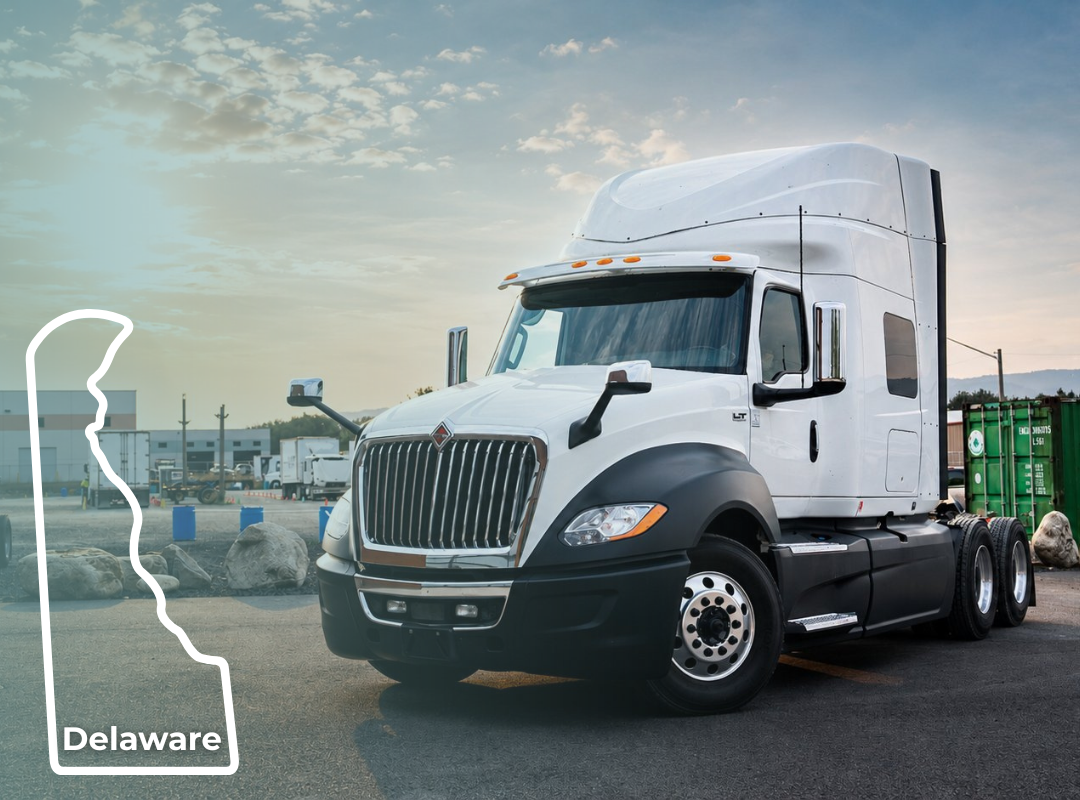
If you want to become a CDL trainer in Delaware, or you already train drivers and want to tighten up compliance, this article is for you. Delaware is one of the states that splits CDL training oversight between two agencies: the DelDOT Division of Motor Vehicles licenses the school and the instructor, and the Delaware Department of Education separately approves that same school as a private trade school. Both sit on top of the federal Entry-Level Driver Training (ELDT) and Training Provider Registry (TPR) rules. A trainer can be excellent behind the wheel and still create audit risk by missing a licensing, reporting, or recordkeeping requirement in any one of the three.
What does a CDL trainer in Delaware actually have to comply with?
At the federal level, Entry-Level Driver Training applies to people seeking a Class A CDL, Class B CDL, Class A or B upgrade, or a first-time passenger, school bus, or hazmat endorsement. To provide that training in compliance with federal law, the provider must be listed on FMCSA's Training Provider Registry, follow the curriculum in 49 CFR Part 380, use instructors who meet the definitions in 49 CFR 380.605 as required by 380.713, and submit training certification records after completion through the TPR.
At the Delaware level, oversight is split. The DelDOT Division of Motor Vehicles licenses commercial driver training schools and their instructors under
21 Del. C. Chapter 83 and
2 DE Admin. Code 2218. The trigger is money, not headcount: § 8301(1) defines a school as a business that trains people to operate motor vehicles and
charges a consideration or tuition, so Delaware has no minimum-student threshold at all. Separately, the Delaware Department of Education must issue a
Certificate of Approval to that same school as a private trade school under
14 Del. C. Chapter 85 and
14 DE Admin. Code 282. DMV inspects facilities and periodically observes instruction; the Department of Education evaluates the school on site and holds the surety bond requirement.
Why Delaware CDL trainer compliance matters.
The reason compliance matters is simple: the training itself is only half the job. FMCSA requires providers to use written theory assessments, document behind-the-wheel proficiency, report completion records through the Training Provider Registry by midnight of the second business day, and retain required records for at least three years under 49 CFR Part 380. Delaware then adds teeth on both of its own layers.
On the DMV side, an instructor license is valid only while you work for the licensed school named on it, must be surrendered within 10 days of leaving that school, and is permanently lapsed once it runs more than 30 days past expiry, which forces a completely new application. Records and contracts have to be produced for the Director during business hours, and a school that fails to file a required accident report faces immediate suspension or revocation of both the school license and its instructor licenses. On the Department of Education side, conducting a private trade school without a Certificate of Approval carries a fine of at least $500 for an individual and $1,000 for a company under 14 Del. C. § 8526. That means trainer compliance is not just personal compliance; it is operational compliance tied to the school or program as a whole.
When do Delaware specific rules apply to a CDL trainer?
For private, tuition-charging CDL schools, both layers apply in full. That means a DMV Commercial Driver Training School license at $115, plus a $50 investigator fee on the original application, a DMV instructor license at $50 for every person who instructs for compensation, and a Department of Education Certificate of Approval carrying a surety bond of no less than $25,000 per calendar year. Delaware CDL programs do appear on the Department of Education's published approved-school list, which is where that second credential shows up.
For public institutions, the picture is different. 21 Del. C. § 8307 exempts driver education classes conducted by state colleges, universities and high schools when they are taught by certified driver training teachers using curriculum approved by those institutions, and Chapter 85 reaches only privately owned schools, which places Delaware Technical Community College, the University of Delaware and Delaware State University outside the Department of Education layer. Because § 8307 is written in the language of driver education rather than commercial training, confirm the scope of that exemption with DMV before relying on it for a Class A CDL program.
For employer-operated in-house programs, both layers release you on the same condition. § 8307 exempts employers maintaining driver training schools without charge, for their employees only, and 14 Del. C. § 8529 exempts training programs conducted by employers or employer associations for their employees or prospective employees. Charge the trainee, or open seats to people who do not work for you, and both exemptions fall away at once.
The federal layer. 49 CFR 380.703(a)(5)(i) conditions listing on the Training Provider Registry on being licensed, certified, registered or authorized to provide training under the laws of any state where in-person training happens, which is what makes the Delaware credentials federally load-bearing rather than merely local.
How do you become a CDL trainer in Delaware?
Delaware licenses instructors directly, and you cannot hold the license on your own. 2 DE Admin. Code 2218 § 9.4.10 bars DMV from issuing an instructor's certificate to anyone not employed by or associated with a licensed school, and the school has to endorse its consent on your application.
Baseline qualifications (§ 9.1)
- United States citizen, of good moral character and sound mind
- At least 18 years old, holding a valid driver's license
- 20/40 corrected vision in both eyes
- No license suspension or revocation in the preceding 2 years
- Fewer than 8 points of moving violations in the preceding 3 years, and no driving-under-the-influence conviction or 4177B trial waiver in the preceding 5 years
- High school diploma or equivalency certificate
- A certified driving abstract if you hold an out-of-state license
For a Commercial Truck Driver Training School, § 9.1.11 replaces the two-semester-hour teacher-preparation course that car schools use with a different test: you must show evidence of United States Department of Transportation certification and qualify by experience or training, or both, to instruct students in the safe operation of truck-tractor trailer combination units.
The application itself (§ 9.4) asks for a recent photograph, FD-258 fingerprints, three letters of reference from unrelated members of the community attesting to your character and apparent teaching ability, a $50 fee, and special eye, written and road tests that include a demonstration of your ability to instruct. Carry the certificate whenever you are giving instruction. It stays valid until December 31 of the year following issuance, and once it has lapsed more than 30 days it is permanently lapsed and cannot be renewed at all.
Federal standards stack on top.
49 CFR 380.605 defines theory and behind-the-wheel instructors and
380.713 requires providers to use them: the proper CDL class with the endorsements needed for the vehicle taught, plus either two years driving a CMV of that class or two years as a behind-the-wheel instructor, while also meeting the state's own instructor requirements.
What does a Delaware CDL trainer have to teach?
Federal ELDT is not a loose outline. FMCSA requires providers to follow the curriculum in the appendices to 49 CFR Part 380 and to use qualified instructors, proper facilities, and proper vehicles. ELDT applies to Class A, Class B, upgrade, passenger, school bus, and hazmat entry-level training pathways.
Delaware then adds a course structure that many states leave alone. 2 DE Admin. Code 2218 § 10.1 requires licensed schools to deliver both theoretical and practical training to standards set by the Director of Motor Vehicles, and § 10.2 sets a state minimum: 10 hours of classroom instruction offered to every student and 6 hours of practical behind-the-wheel training given to each student, with the course scheduled over no more than 3 calendar weeks. Time in a parked vehicle does not count as behind-the-wheel training. DMV periodically observes the course and evaluates it for content and standards under § 10.4.
How are Delaware trainees evaluated?
Federally, the theory side must include a written assessment, and the trainee must earn an overall minimum score of 80 percent under 49 CFR 380.715. For behind-the-wheel training, instructors must evaluate and document proficiency in the required skills. FMCSA imposes no minimum number of theory or behind-the-wheel hours for ELDT; the standard is covering the required curriculum and documenting that the trainee is proficient.
At the Delaware level, the requirements are procedural. A school must confirm the student holds a
Delaware learner's permit or a valid driver's license before any behind-the-wheel instruction (§§ 6.9 and 6.10), and that all instruction happen under a written contract on a form
approved in advance by the Director, stating the hourly rate, the date and length of every lesson, and the total hours for both classroom and behind-the-wheel training (§ 6.4). A Delaware contract may not carry the phrase "NO REFUND" and may not state or imply that a driver license is guaranteed.
What records does a Delaware CDL trainer or school need to keep?
This is the section most compliance-focused readers care about. Under FMCSA's ELDT rules, providers on the Training Provider Registry must retain trainee self-certifications, copies of each trainee's commercial learner permit or CDL, instructor qualification documentation with instructor CDL and endorsement copies, lesson plans for theory and behind-the-wheel training, and individual assessment records, for at least three years under 49 CFR 380.725. Completion data goes to the Registry by midnight of the second business day after training ends, including the total clock hours the trainee spent on behind-the-wheel training.
Delaware's DMV recordkeeping rules are older and more prescriptive than most states', and they should be read literally. 2 DE Admin. Code 2218 § 6.2 names four things that have to be kept current by the close of the business day following each transaction:
- a permanently bound, consecutively numbered book listing every student and every contract number, maintained in contract-number sequence
- a Student Record File holding a record card and a duplicate contract for each student, filed alphabetically, listing services rendered with dates, the instructor who performed them, and the vehicle used
- a permanently bound Cash Book recording every receipt and disbursement
- pre-printed, sequentially numbered receipts, original to the student and duplicate retained by the school
All records and contracts are retained for three years under § 6.13 and are open to inspection by the Director during regular business hours, which lines up neatly with the federal three-year clock. A school must also file an accident form with DMV whenever a student and instructor are involved in a crash; § 6.1 states that failing to provide or maintain that form results in immediate suspension or revocation of the school license and its instructor licenses.
What about school-level compliance in Delaware?
Even in a trainer-focused article, school-level compliance matters, because instructors work inside a regulated program. On the DMV side, 2 DE Admin. Code 2218 requires a permanent place of business open to the public, with office and classroom space of at least 200 square feet combined (§ 3.5) and a classroom of at least 150 square feet overall, including 70 square feet for the instructor and 12 square feet for each student (§ 8.2.1). A classroom may not sit more than 15 miles from the office of any school using it without the Director's approval. No school license issues until at least one instructor is licensed (§ 2.4), relocation needs written DMV permission, and each branch office is licensed separately at $10 plus a $25 investigator fee. Training vehicles must be owned or leased by the school and insured at $25,000 / $50,000 / $10,000 minimums. Tractor-trailer combinations are excused from dual controls but must carry a device such as a trolley brake that lets the instructor bring the vehicle to a halt (§ 7.1.2).
The surety bond sits with the Department of Education, not DMV. Under 14 Del. C. § 8505, no private trade school bond may be written for less than $25,000 per calendar year, and a school operating in or from Delaware must bond at an amount equal to the highest anticipated gross prepaid tuition for students enrolled on any given day in the certificate year, which for most CDL programs is the figure that actually governs. Bonds are deposited with the Secretary of State, and the Department requires evidence that the bond runs from the date of a complete application through the certificate's expiration date.
Two sets of dates are worth knowing, and one pair conflicts.
21 Del. C. § 8305 says school and instructor licenses expire on the last day of the calendar year, while
2 DE Admin. Code 2218 § 2.1 says they expire on the last day of December
in the year following their issuance. Renewals must be filed
not more than 60 days and not fewer than 30 days before expiry and will not be accepted afterwards. Department of Education certificates run on a different clock entirely: renewal falls due by the end of the
calendar quarter in which the certificate was originally granted. Confirm your own dates with both agencies rather than assuming they line up.
What are common Delaware CDL compliance mistakes?
- Holding one credential and assuming it is the credential. A DMV school license does not satisfy the Department of Education, and a Certificate of Approval does not license your instructors. A tuition-charging Delaware school needs both, plus Training Provider Registry listing.
- Treating ELDT like an hour-counting exercise instead of a documented curriculum-plus-proficiency requirement.
- Assuming headcount decides it. In Delaware the trigger is charging. If you charge for the training, you are in scope, whether you train two people a year or two hundred.
- Letting an instructor license lapse past 30 days. There is no grace period beyond that point. The license is permanently lapsed and the whole application starts over, reference letters and tests included.
- Keeping the money records loosely. The bound contract book, the Student Record File, and the Cash Book are named requirements posted by the close of the next business day, not general good practice.
- Missing the Training Provider Registry reporting deadline after training completion.
- Letting trainer qualifications live in people's heads instead of in organized records that can be produced during a review.
Final takeaway.
Being a CDL trainer in Delaware is not just about teaching safe driving. It means operating inside a compliance structure with three moving parts: federal ELDT rules and Training Provider Registry reporting, DelDOT DMV school and instructor licensing under Chapter 83, and a Department of Education Certificate of Approval with the surety bond attached to it. Those parts run on two different calendars, and the recordkeeping rules are specific enough that a program can be teaching well and still fail an inspection on its contract book. The trainers and programs that stay out of trouble are the ones that build documentation, instructor files, training logs, and completion workflows before they scale.
Compliance disclaimer.
This page is provided for general informational purposes and reflects federal and Delaware requirements as of August 2026. It is not legal advice. It draws on 21 Del. C. Chapter 83, 2 DE Admin. Code 2218, 14 Del. C. Chapter 85, 14 DE Admin. Code 282, the DelDOT Division of Motor Vehicles, the Delaware Department of Education, and FMCSA's ELDT and Training Provider Registry materials. Applicability varies by training model and provider type, and Delaware's motor-vehicle rule has not been amended in some years, so verify current requirements with the DMV Commercial Driver Training School Licensing Section, the Department of Education's Private Business and Trade Schools office, and qualified counsel before making compliance decisions.