
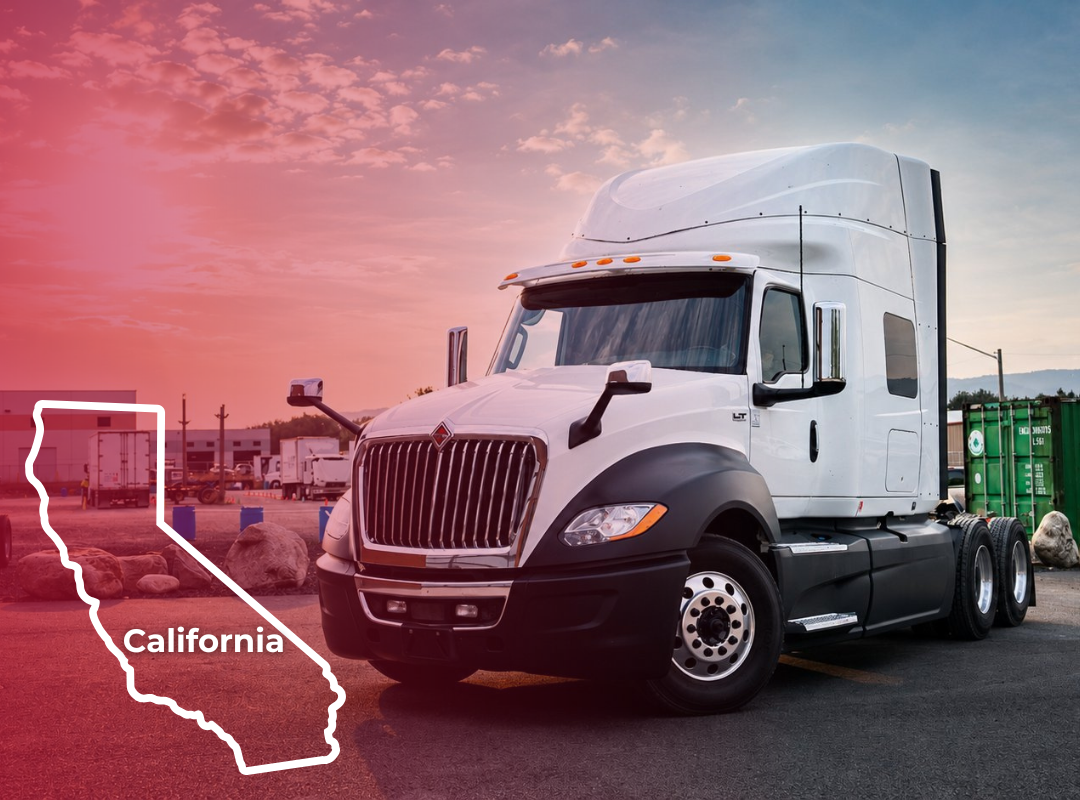
California CDL Trainer Requirements:
Learn the California CDL trainer requirements that matter most for compliance.
What, Why, When, and How to Stay Compliant in the State of California.
If you want to become a CDL trainer in California, or you already train drivers and want to tighten up compliance, this article is for you. In California, CDL training compliance can involve the federal Entry-Level Driver Training (ELDT) and Training Provider Registry (TPR) rules, the California DMV's 15-hour behind-the-wheel requirement, and Bureau for Private Postsecondary Education (BPPE) approval for private schools. That matters because a trainer can be excellent behind the wheel and still create audit risk if the program misses approval, reporting, instructor, or recordkeeping requirements.
What does a CDL trainer in California actually have to comply with?
At the federal level, Entry-Level Driver Training applies to people seeking a Class A CDL, Class B CDL, a Class A or B upgrade, or a first-time passenger, school bus, or hazmat endorsement. To provide that training in compliance with federal law, the provider must be listed on FMCSA's Training Provider Registry, use the required curriculum under 49 CFR Part 380, use instructors who meet the definitions in 49 CFR 380.605 as required by 49 CFR 380.713, and submit training certification records after completion through the TPR.
At the California level, two agencies are involved. The
Department of Motor Vehicles (DMV) issues the CDL and, under
Vehicle Code 15250.1 and
13 CCR 26.03, requires every applicant for an original Class A or B license to complete
at least 15 hours of behind-the-wheel training, at least 10 of them on a public road, documented on form
DL 1236. The
Bureau for Private Postsecondary Education (BPPE), part of the Department of Consumer Affairs, approves private schools under the
California Private Postsecondary Education Act of 2009. Under
Education Code 94886, a private postsecondary institution operates in California only with a
BPPE approval to operate or a statutory exemption.
Why California CDL trainer compliance matters.
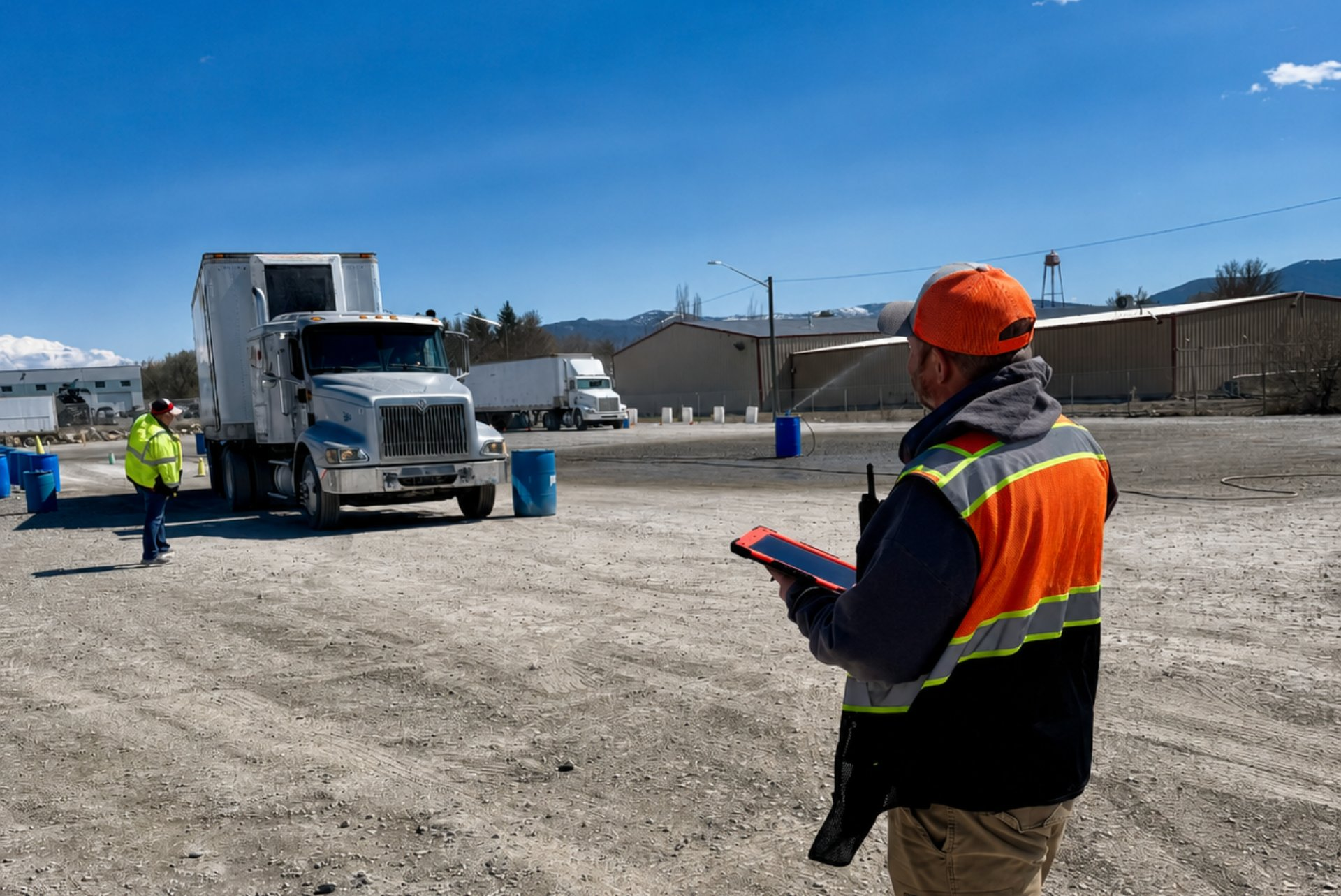
The reason compliance matters is simple: the training itself is only half the job. FMCSA requires providers to use written theory assessments and document behind-the-wheel proficiency under 49 CFR 380.715, report completion records through the Training Provider Registry by midnight of the second business day under 49 CFR 380.717, and retain required records for at least three years under 49 CFR 380.725. When a program gets audited, the biggest failures usually come from missing proof, not missing instruction.
California adds its own proof points. The
DL 1236 logs each training date, the public-road and private-property hours, and each instructor's name, address, and commercial driver license number, and the applicant certifies it under penalty of perjury. For a BPPE-approved school, the Bureau grants approval only after confirming the minimum operating standards through site visits or other methods (Education Code 94887), and every record the Act requires is kept in California and made immediately available for inspection during normal business hours (5 CCR 71930).
That means trainer compliance is not just personal compliance; it is operational compliance tied to the school or program as a whole.
When do California specific rules apply to a CDL trainer?
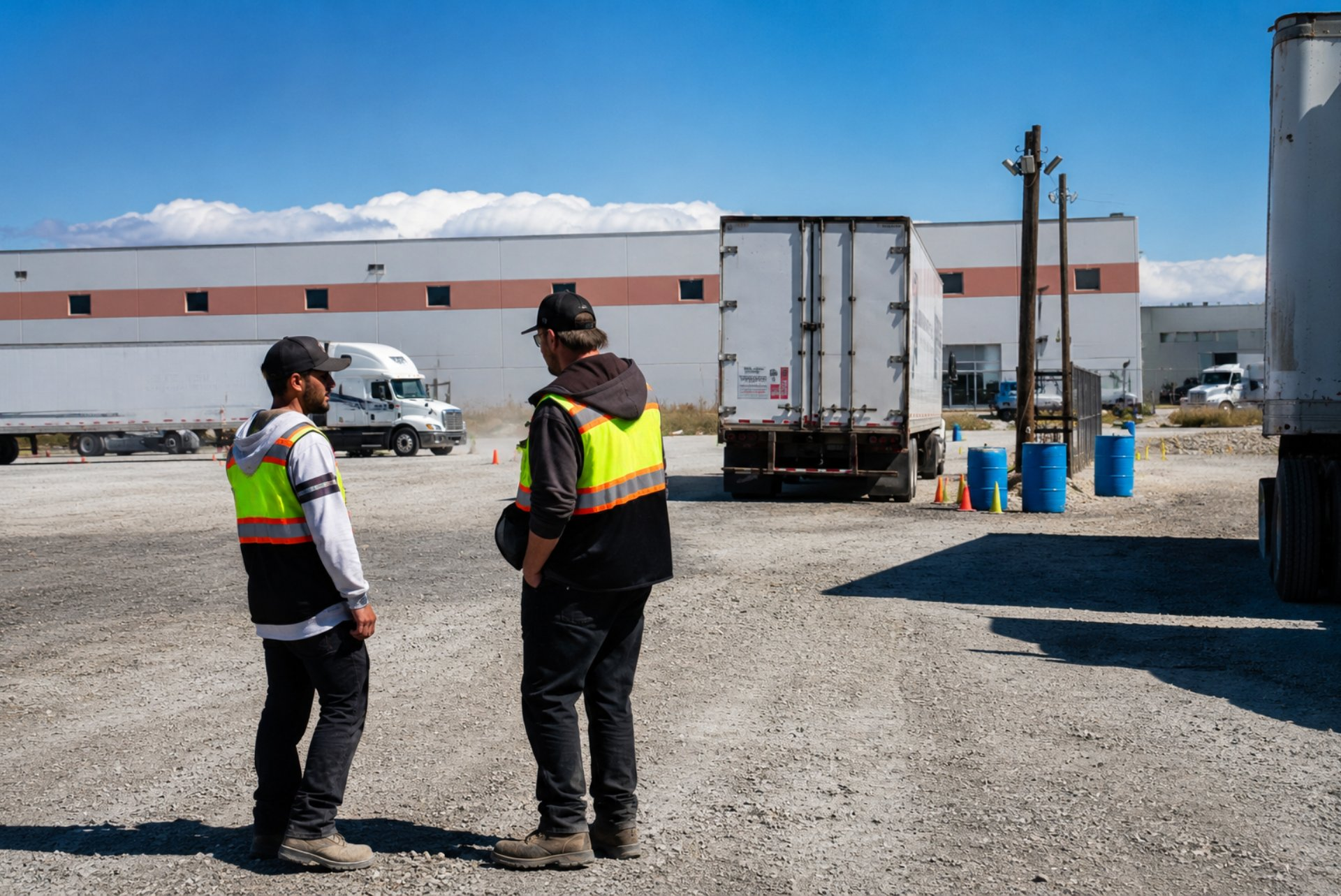
Under Vehicle Code 15250.1, every applicant for an original Class A or B CDL completes the 15 hours and files a DL 1236 before the license issues, so the requirement travels with every trainee, whether the training comes from a private school, a community college, a public agency, or an employer in-house program. The rule names an original Class A or B license and the DL 1236 names a first Class A or first Class B license, so confirm with DMV whether a Class B to Class A upgrade needs a DL 1236.
BPPE approval reaches a narrower group: a private entity with a physical presence in California that offers postsecondary education to the public for an institutional charge (Education Code 94858). Institutions established, operated, and governed by the federal government, the state, or its political subdivisions, including community colleges, are exempt under Education Code 94874(c). An employer program that trains only its own employees at no charge sits outside that definition; confirm your program's status with BPPE.
Watch the January 1, 2027 change. Through December 31, 2026, Education Code 94874(f) exempts a non-degree institution whose programs total $2,500 or less and that takes no state or federal postsecondary funding. Under AB 2771 (Chapter 217, Statutes of 2026), starting January 1, 2027 that exemption stops applying to institutions that provide any Class A, B, or C commercial license training, except employer-administered programs at entities employing 250 or more CDL drivers in California. A school relying on the exemption on December 31, 2026 may keep operating until January 1, 2028 if, by March 31, 2027, it files a complete BPPE application and gives the Bureau and its current and prospective students a written notice that approval is pending.
So California trainers should think in layers.
The federal ELDT and TPR layer applies to every entry-level training provider, and the DMV's 15-hour minimum applies to every original Class A or B applicant. BPPE approval applies to private institutions offering CDL training to the public for a charge. If your program sits in both, both have to be satisfied at the same time.
How do you become a CDL trainer in California?
For a BPPE-approved school, instructor qualifications come from the Bureau's minimum operating standards. Under 5 CCR 71720(b), each instructor in a non-degree program has the academic, experiential, and professional qualifications to teach, including at least three years of experience, education, and training in current practices of the subject taught; where an instructor has less, the school documents equivalent qualifications. Instructors keep current through continuing education in their subject area, classroom management, or teaching, and the school may not employ an instructor adjudicated as having violated the Act or committed an act that is grounds for license denial under Business and Professions Code 480. The school catalog describes its faculty and their qualifications (Education Code 94909).
On the DMV side, every behind-the-wheel hour on the DL 1236 lists the instructor's name, address, and commercial driver license number. Where the DMV driving school license applies (see school-level compliance below), each instructor also holds a DMV driving school instructor license: at least 21 years old, a valid California driver's license, Live Scan background clearance, a physician's health report or a current DOT medical examination report and certificate, a high school diploma or equivalent, a passing score on the DMV written exam, and employment by a licensed driving school.
For federal ELDT, instructor standards are separate and stack on top of California's requirements.
49 CFR 380.605 defines theory and behind-the-wheel instructors, and
49 CFR 380.713 requires training providers to use them: generally the proper CDL class and endorsements plus either at least two years of CMV driving experience in that class or endorsement, or two years of experience as a BTW instructor, while also meeting applicable state instructor qualification requirements.
What does a California CDL trainer have to teach?
Federal ELDT is not a loose outline. FMCSA requires providers to follow the curriculum in 49 CFR Part 380 and to use qualified instructors, proper facilities, and proper vehicles. ELDT applies to Class A, Class B, upgrade, passenger, school bus, and hazmat entry-level training pathways.
California adds a behind-the-wheel floor for original Class A and B applicants. Under
Vehicle Code 15250.1, the course includes
at least 15 hours of behind-the-wheel training, at least 10 of them on a public road, with every 50 minutes of driving time counted as one hour, and the
DMV's ELDT guidance describes these hours as actual operation of a CMV on a range or public road. For a BPPE-approved school, each program's content must be able to achieve its stated objective (Education Code 94885), and the catalog describes each program, its required courses, any final tests, and the total clock hours required to complete it (Education Code 94909).
How are California trainees evaluated?
Federally, the theory side must include a written assessment, and the trainee must earn an overall minimum score of 80 percent under 49 CFR 380.715. For behind-the-wheel training, instructors must evaluate and document proficiency in the required BTW skills. FMCSA does not impose a minimum number of federal theory or BTW hours for ELDT; the focus is on covering the required curriculum and documenting that the trainee is proficient.
In California, the behind-the-wheel hours are counted as well. The training provider completes Section 2 of the
DL 1236 with the 15 or more hours, and the applicant submits the form to DMV through the
Virtual Field Office before the CDL issues. DMV accepts one DL 1236 per applicant and allows a provider to total hours by week, entering the last training day of each week in the date column. For a BPPE-approved school, a student who satisfactorily completes a program receives a document signifying the diploma or certificate awarded (Education Code 94885), and the school keeps a permanent record of the certificate, the date it was granted, the courses it was based on, and the grades earned (Education Code 94900).
What records does a California CDL trainer or school need to keep?
Under 49 CFR 380.725, training providers on the TPR must retain records including copies of trainees' CLPs or CDLs, the behind-the-wheel self-certifications trainees provide, instructor qualification documentation, lesson plans, and records of individual assessments. Those records must be retained for at least three years from the date each record is generated or received, and the rule leaves any longer state retention period in place. FMCSA also requires providers to submit training certification information through the Training Provider Registry by midnight of the second business day after completion, including the total clock hours the trainee spent completing BTW training, under 49 CFR 380.717.
California adds two record streams. For every original Class A or B trainee, the provider completes Section 2 of the DL 1236, logging each training date, the license class, public-road and private-property hours, and the instructor's name, address, and commercial driver license number. For a BPPE-approved school, 5 CCR 71930 requires every record the Act requires to be kept in California, pertinent student records for five years from the date of completion or withdrawal, and transcripts permanently under Education Code 94900. The school keeps a second set of academic and financial records at a different location unless the originals are stored secure from damage or loss, such as in fire-resistant cabinets, and makes all required records immediately available for inspection during normal business hours.
What about school-level compliance in California?
BPPE approves an institution to operate only after confirming the school meets the minimum operating standards, through site visits or other methods (Education Code 94887). An approved school publishes a catalog and a School Performance Fact Sheet, enrolls students only through a signed enrollment agreement, gives each student the right to cancel for a refund through the first class session or the seventh day after enrollment, whichever is later, and adds a separate branch only with Bureau approval. Under Education Code 94930.5 as amended by AB 2771, effective January 1, 2027, the approval application fee is $12,000, the main-campus renewal fee is $6,500, a new branch application is $3,000, and the annual fee is 0.75 percent of each campus's California student revenue, with a $4,000 minimum and a $75,000 maximum.
The DMV licenses driving schools separately under
Vehicle Code 11100, which requires a DMV license to own or operate a driving school or give driving instruction for compensation, with a licensed owner, operator, and instructor at each
DMV-licensed driving school. Section 11100(b) carves out instruction in motor trucks of three or more axles weighing more than 6,000 pounds unladen, and DMV exempts public schools and educational institutions in which driving instruction is part of the curriculum. Whether a particular Class A, Class B, or passenger program needs a DMV driving school license depends on the training vehicle, so confirm with DMV Occupational Licensing before launch or renewal.
What are common California CDL compliance mistakes?
- Assuming the 15-hour behind-the-wheel minimum applies only to private schools. It applies to every original Class A or B applicant, including community college and in-house trainees.
- Logging observation or simulator time toward the 15 hours. The DL 1236 hours are time the trainee spends operating the vehicle, at least 10 of them on a public road.
- Counting on the $2,500-or-less BPPE exemption after December 31, 2026, or missing the March 31, 2027 application and notice deadline.
- Treating the 15 hours as the whole job instead of the full ELDT curriculum, an 80 percent theory assessment, and documented BTW proficiency.
- Keeping BPPE school records outside California, or for less than five years after a student completes or withdraws.
- Missing the TPR reporting deadline after training completion.
- Letting trainer qualifications live in people's heads instead of in organized records that can be produced during a review.
Final takeaway.
Being a CDL trainer in California is not just about teaching safe driving. It means operating inside a compliance structure that includes federal ELDT rules and TPR reporting, the DMV's 15-hour behind-the-wheel minimum and DL 1236, and, for private schools that charge the public, BPPE approval, catalog and enrollment rules, and five-year records kept in California. The trainers and programs that stay out of trouble are usually the ones that build documentation, instructor files, training logs, and completion workflows before they scale.
Compliance disclaimer.
This article summarizes public California Department of Motor Vehicles and Bureau for Private Postsecondary Education materials, California Vehicle Code sections 11100 and 15250.1, Education Code sections 94800 and following as amended by AB 2771 (2026), Titles 5 and 13 of the California Code of Regulations, and FMCSA Training Provider Registry and ELDT materials for general information, current as of October 2026. Applicability can vary by training model, provider type, and whether your program is school-based, employer-based, or government-run, so California providers should verify current requirements with DMV and BPPE before relying on this summary.