
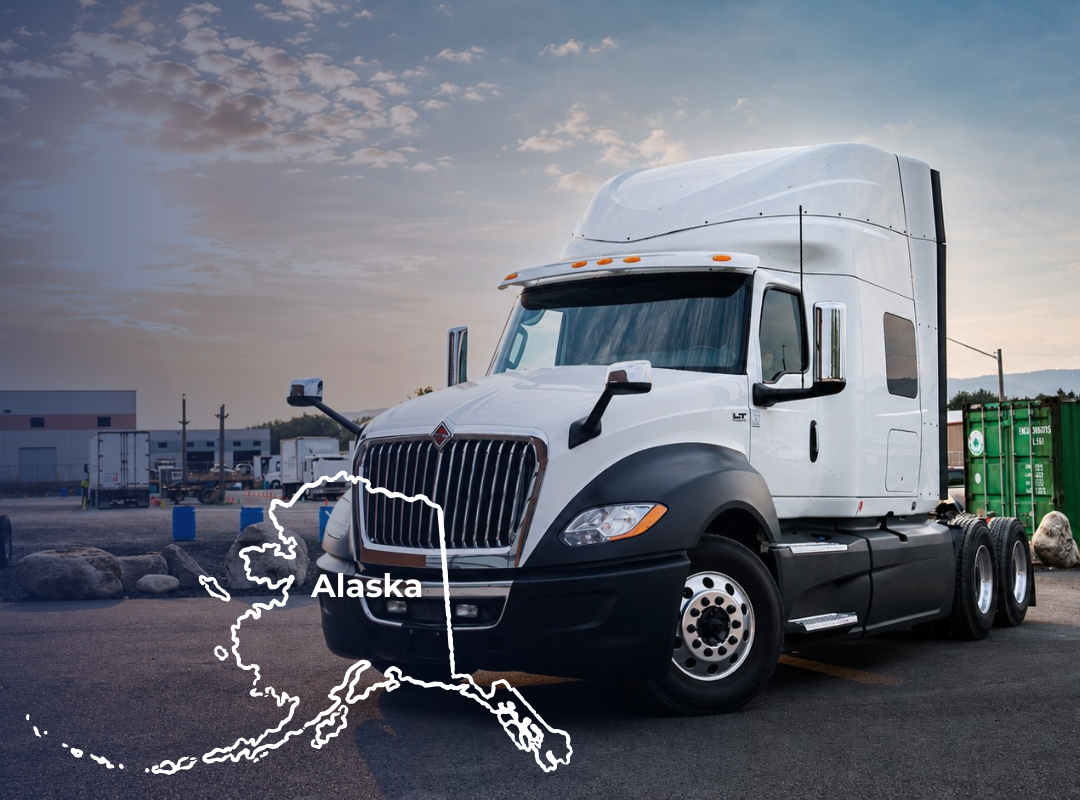
Alaska CDL Trainer Requirements:
Learn the Alaska CDL trainer requirements that matter most for compliance.
What, Why, When, and How to Stay Compliant in the State of Alaska.
If you want to become a CDL trainer in Alaska, or you already train drivers and want to tighten up compliance, this article is for you. In Alaska, CDL training compliance can involve the federal Entry-Level Driver Training (ELDT) and Training Provider Registry (TPR) rules, Alaska DMV licensing for driver training schools and instructors, and ACPE authorization for postsecondary schools. That matters because a trainer can be an excellent behind-the-wheel instructor and still create audit risk if the program misses licensing, reporting, instructor, or recordkeeping requirements.
What does a CDL trainer in Alaska actually have to comply with?
At the federal level, Entry-Level Driver Training applies to people seeking a Class A CDL, a Class B CDL, a Class B to A upgrade, or a first-time passenger, school bus, or hazmat endorsement. To provide that training under federal law, the provider must be listed on FMCSA's Training Provider Registry, follow the curriculum in 49 CFR Part 380, use instructors who meet the theory and behind-the-wheel definitions in 49 CFR 380.605 as required by 49 CFR 380.713, and submit training certification records through the TPR after completion.
At the Alaska level, oversight is split between two agencies. The
Department of Administration, Division of Motor Vehicles (DMV) licenses commercial driver training schools and their instructors under
AS 28.17 and
2 AAC 91. Under
AS 28.17.011, no one may operate a school or act as its instructor without a DMV license, and
AS 28.17.071 defines a school as a business or nonprofit enterprise that trains people to drive
for which a consideration or tuition is charged. Separately, the
Alaska Commission on Postsecondary Education (ACPE) requires postsecondary institutions operating in Alaska, vocational schools included, to hold Authorization or an Exemption from Authorization under
AS 14.48.
Why Alaska CDL trainer compliance matters.
Compliance matters because delivering the training is only half the job. FMCSA requires providers to use written theory assessments, document behind-the-wheel proficiency, report completion records through the Training Provider Registry by midnight of the second business day, and keep required records for at least three years under 49 CFR Part 380. Alaska DMV adds annual school and instructor licenses, a DMV-approved course of instruction, and student records that must be open to DMV inspection at all times. When a program is reviewed, the biggest failures usually come from missing proof, not missing instruction.
DMV may refuse, suspend, or revoke a school or instructor license under
AS 28.17.051, and a school license requires at least one licensed instructor or third-party examiner, who may be the school's operator, under
2 AAC 91.010.
Trainer compliance is therefore tied to the licensed school as a whole, not only to the individual instructor.
When do Alaska specific rules apply to a CDL trainer?
The DMV layer turns on payment. Under AS 28.17.071, the license requirement applies to a business or nonprofit enterprise that charges a consideration or tuition to train people to drive, in theory, practice, or both. AS 28.17.021 exempts driver education approved by DMV, or by the Department of Education and Early Development with DMV's concurrence, and courses taught at an accredited college or university; an instructor there is exempt only while acting for that institution. An employer training its own employees at no charge sits outside the school definition, so confirm with DMV before attaching any fee to in-house training.
The ACPE layer reaches postsecondary institutions, which
AS 14.48 defines to include vocational schools. ACPE states that a program reporting to another state agency still needs its own
Authorization or Exemption, awarded on application, and its
published directory lists several Alaska CDL schools as Regulatory Exempt. Public and employer programs should confirm with ACPE whether to apply for an exemption.
Only the federal ELDT and TPR layer applies to every provider; the DMV and ACPE layers reach private, tuition-charging schools, and a school under both has to satisfy all three layers at once.
How do you become a CDL trainer in Alaska?
Under 2 AAC 91.020, an instructor applicant submits a DMV application, the $5 instructor license fee set by AS 28.17.031, and fingerprints for a state and national criminal history check. The applicant must be at least 25 years old and of good moral character, must have held a valid driver's license for the class of vehicle taught for at least two years, and must pass a DMV exam on traffic laws, safe driving, commercial vehicle operation, teaching methods, 49 CFR Parts 390 and 391, and driver training school law. The exam may be taken twice in 12 months at most, one week apart. Applicants also document at least 40 hours of college-level or equivalent training in driving skills or classroom teaching methods.
The rule bars frequent traffic convictions in the prior two years, and any reckless driving or DUI-related conviction or pending charge, or any license suspension, revocation, or disqualification, in the prior five years. CMV instructors also need three years of CMV driving experience within the last seven years and a current DOT medical card. DMV may interview any applicant, and its Partner Services page lists a driving record issued within 30 days and a $47 background check fee. Licenses expire December 31 (2 AAC 91.040).
For federal ELDT, instructor standards stack on top of Alaska's.
49 CFR 380.605 defines theory and behind-the-wheel instructors, and
49 CFR 380.713 requires providers to use them: generally, the proper CDL class and endorsements, plus two years of CMV driving experience in that class or two years as a behind-the-wheel instructor, while meeting applicable state requirements.
What does a Alaska CDL trainer have to teach?
The federal curriculum sets the content. FMCSA requires providers to follow the curriculum in 49 CFR Part 380 and use qualified instructors, proper facilities, and proper vehicles across the Class A, Class B, upgrade, passenger, school bus, and hazmat training pathways.
Alaska adds a course approval step.
AS 28.17.041 requires instruction for commercial motor vehicles to
meet or exceed the USDOT model curriculum for training tractor-trailer drivers, and
2 AAC 91.080 allows instruction only when the course is
approved by DMV and, for entry-level CDL training,
listed on FMCSA's Training Provider Registry. The student must hold a valid instruction permit or license for the class of vehicle used, and each training CMV must meet 49 CFR Parts 390 to 399.
How are Alaska trainees evaluated?
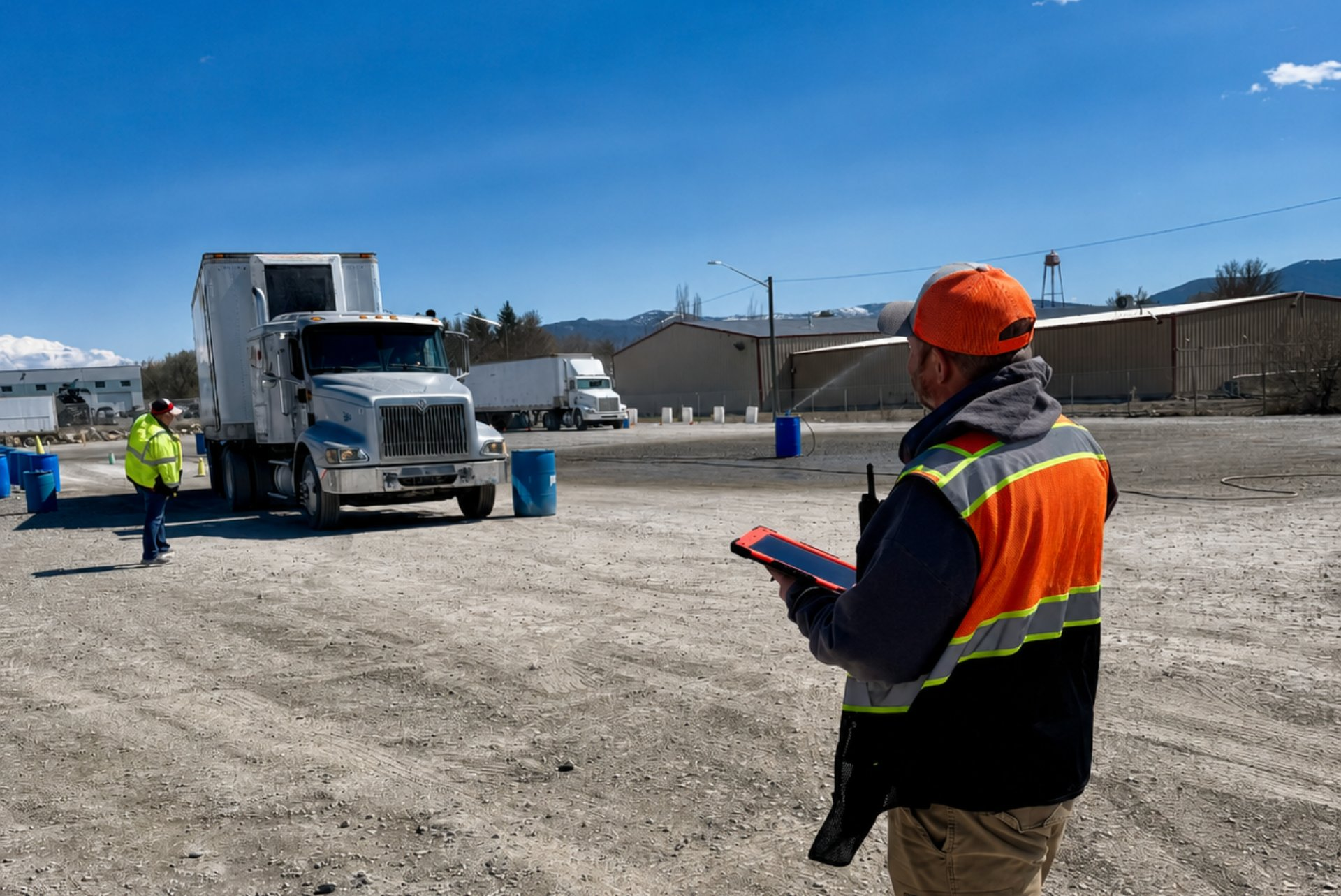
Federally, theory training ends in a written or electronic assessment, and the trainee must score at least 80 percent overall under 49 CFR 380.715. Behind-the-wheel training is proficiency-based: instructors evaluate and document each required range and road skill, and the federal rule measures demonstrated proficiency rather than a set number of hours.
In Alaska, a licensed driving school may also serve as a DMV third-party tester. When it does,
2 AAC 91.175 provides that an instructor certified as a third-party skills test examiner
may not give the CDL skills test to an applicant that the instructor skills-trained. Third-party examiners meet the instructor qualifications in
2 AAC 91.020 and the federal examiner rules in 49 CFR 383.75 and 384.228.
What records does a Alaska CDL trainer or school need to keep?
Under FMCSA's ELDT rules, providers on the TPR keep records including trainee CLP or CDL copies, instructor qualification documentation, instructor CDL and endorsement copies where applicable, and lesson plans, generally for at least three years (49 CFR 380.725). Completion certifications, including the trainee's total behind-the-wheel clock hours, must reach the Training Provider Registry by midnight of the second business day after training ends.
Alaska adds its own student log. 2 AAC 91.150 requires each licensee to record, for every person instructed or tested, the person's name, date of birth, address, telephone number, and license or instruction permit number, the vehicle class and type of instruction or testing, and how much time went to each type. The record is kept for at least three years and stays open to DMV inspection at all times.
Schools also file proof of insurance describing each instruction vehicle by make, model, year, and VIN, and notify DMV at least 30 days before a policy is cancelled or expires (2 AAC 91.080). Under AS 14.48.165, ACPE directs exempt institutions to keep each on-campus student's signed meningococcal immunization or notice acknowledgment for at least one year after the student's last day of attendance.
What about school-level compliance in Alaska?
School licensing sits with DMV. Under 2 AAC 91.010, an applicant pays the $25 school license fee in AS 28.17.031, submits fingerprints for each signatory, is at least 25, and keeps an owned or leased place of business open to the public. The school holds an Alaska business license, carries $1,000,000 general liability and $1,000,000 motor vehicle liability per occurrence, offers a DMV-approved course, and employs at least one licensed instructor. Licenses expire December 31, and renewal is due at least 30 days before (2 AAC 91.040). A temporary location needs written DMV approval (2 AAC 91.100).
One detail to confirm is the bond. AS 28.17.041 lets DMV require insurance or bonds, and the rule text sets the insurance minimums above, while DMV's
Partner Services page lists a
$100,000 surety bond and a state contract for commercial driving school partners. Confirm the current requirement with DMV before launch or renewal. With
ACPE, an exemption application costs
$250 and runs up to five years, and Authorized institutions carry an ACPE surety bond.
What are common Alaska CDL compliance mistakes?
- Missing the renewal filing, which is due at least 30 days before school and instructor licenses expire on December 31.
- Treating the DMV school license as the whole-state picture when the school also needs ACPE Authorization or Exemption.
- Treating ELDT like an hour count instead of a documented curriculum-plus-proficiency requirement.
- Scheduling an instructor to give the CDL skills test to a student that same instructor trained.
- Keeping student logs that skip the time spent on each type of instruction, or missing the TPR reporting deadline.
Final takeaway.
Training CDL drivers in Alaska takes more than teaching safe driving. It means working inside federal ELDT and TPR rules, DMV school and instructor licensing, and, for postsecondary programs, ACPE authorization or exemption. The programs that stay out of trouble build documentation, instructor files, student logs, and completion workflows before they scale.
Compliance disclaimer.
This article summarizes Alaska Statutes chapter 28.17, 2 AAC 91,
Alaska Division of Motor Vehicles materials,
Alaska Commission on Postsecondary Education materials under AS 14.48 and 20 AAC 17, and FMCSA Entry-Level Driver Training and Training Provider Registry materials, for general information. Current as of October 2026. Applicability can vary by training model and by whether your program is school-based, employer-based, or government-run, so Alaska providers should verify current requirements with DMV and ACPE before relying on this summary.