
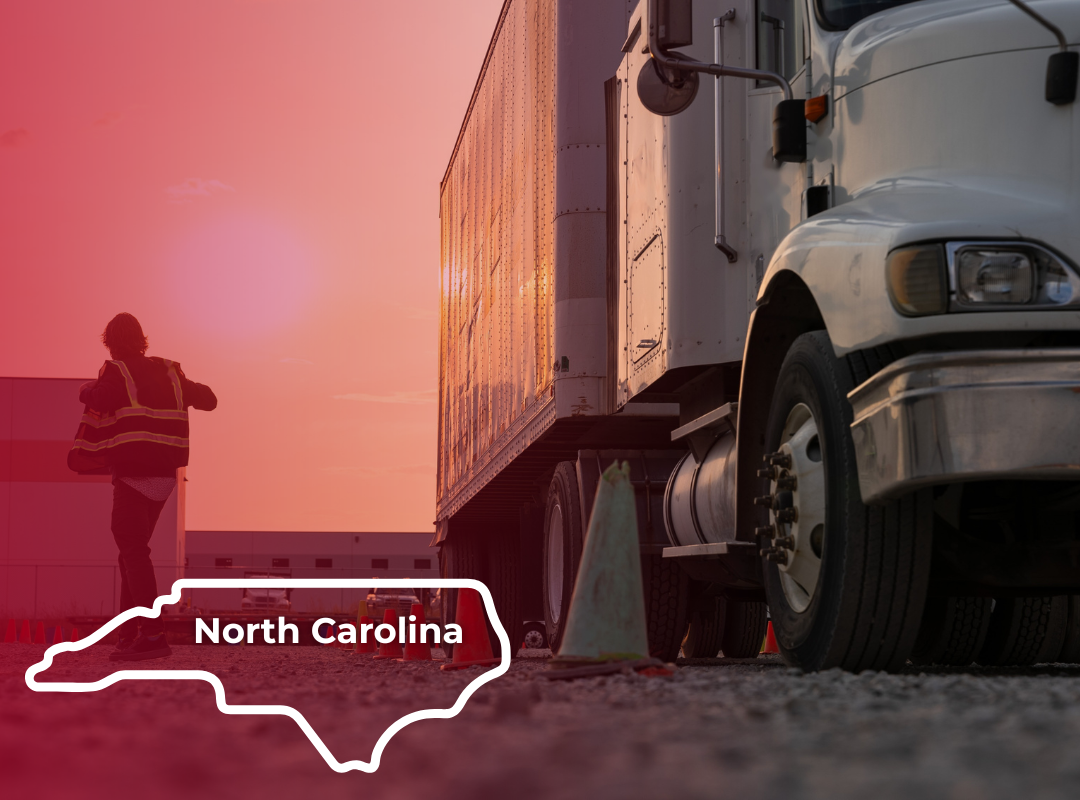
North Carolina CDL Trainer Requirements:
Learn the North Carolina CDL trainer requirements that matter most for compliance.
What, Why, When, and How to Stay Compliant in the State of North Carolina
In North Carolina, the compliance picture starts with federal ELDT and Training Provider Registry rules, then adds North Carolina-specific layers, all of which run through a single agency: NCDMV. Unlike states that split CDL training oversight between an education department and a motor-vehicle agency, North Carolina concentrates it: a commercial truck driver training school license, an NCDMV-issued instructor license system, and state vehicle inspection and bonding requirements are all administered under G.S. Chapter 20, Article 14 (the Driver Training School Licensing Law) and the implementing rules in 19A NCAC 03J.
That single-agency structure simplifies who you answer to, but it also means NCDMV's Enforcement CDL Compliance Section touches every part of your operation: your school license, your instructors, your vehicles, your facilities, your contracts, and (if you choose to add it) your Third Party Tester certification for administering CDL skills tests on-site.
What does a CDL trainer in North Carolina have to comply with?
Since February 7, 2022, anyone obtaining a Class A or Class B CDL for the first time, upgrading from Class B to Class A, or seeking a first-time hazmat, passenger, or school bus endorsement must complete Entry-Level Driver Training under 49 CFR Part 380 from a provider listed on the FMCSA's Training Provider Registry (TPR).
Registration on the TPR is self-certified, but the certification has teeth: providers must deliver the full theory curriculum (passing score of 80% or higher), conduct behind-the-wheel range and road training to documented proficiency, and submit each driver's completion data to the TPR by midnight of the second business day after completion. NCDMV cannot administer the CDL skills test (or the hazmat knowledge test) until the TPR shows a completed ELDT record.
For North Carolina providers, the federal layer is the floor, not the ceiling. The state's own licensing, curriculum-hour, instructor, vehicle, and bonding rules sit on top of it, and they are more prescriptive than ELDT in several places.
Why North Carolina CDL trainer compliance matters.
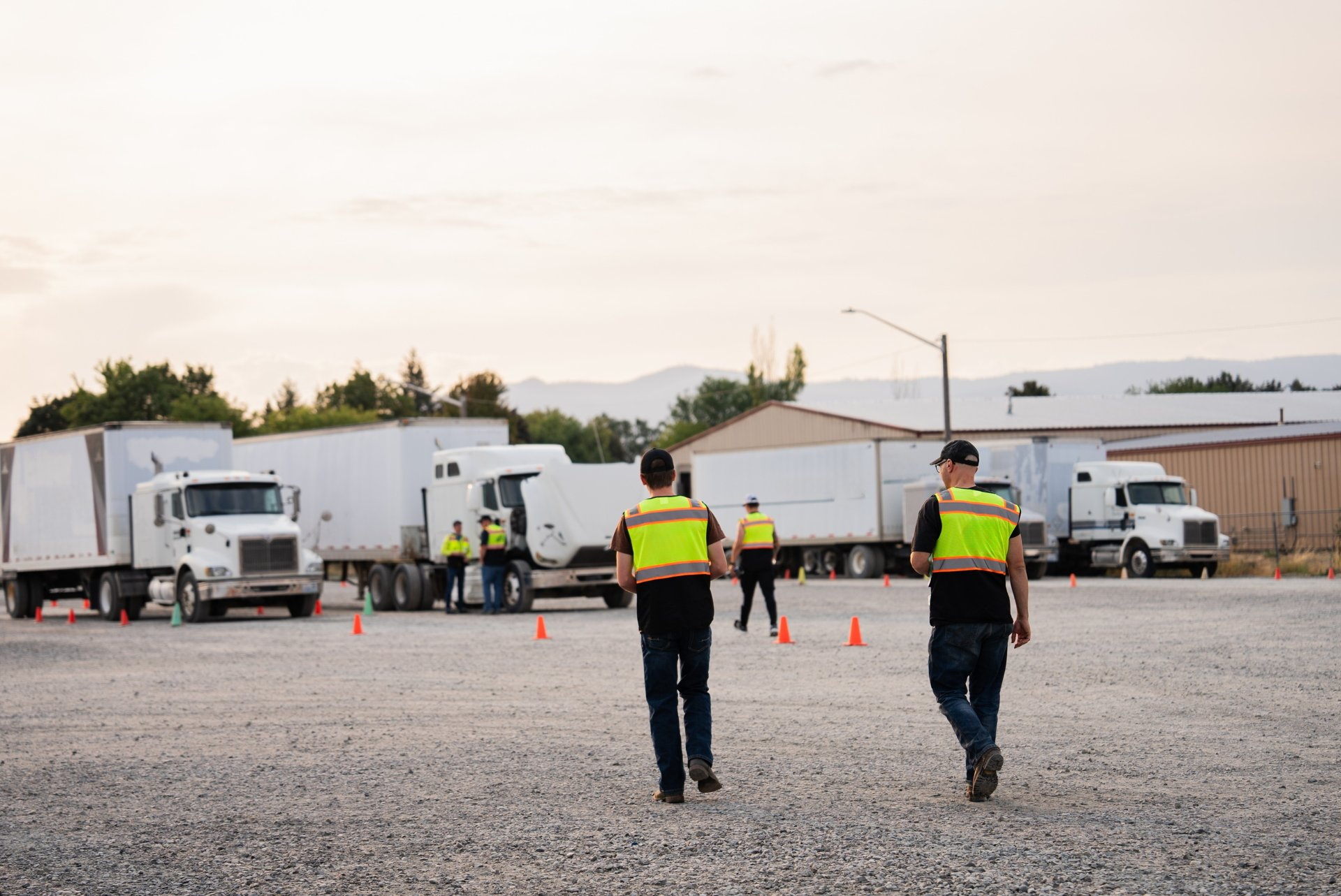
Training students well is only part of the job. In North Carolina, how your school is set up, who is allowed to instruct, what you report, and how current your licenses are all carry legal weight. NCDMV conducts inspections at least annually of every licensed school and branch, examining records, contracts, classroom facilities, training devices, instructional methods, and vehicles. Refusal to permit an inspection is itself grounds for revocation under 19A NCAC 03J .0305.
The enforcement teeth are real: NCDMV may suspend or revoke a school or instructor license for violating any provision of Article 14 or its rules (G.S. §20-325), and operating in violation of the Article is a Class 3 misdemeanor under G.S. §20-327. Both school and instructor licenses run on two-year cycles, and a license expired for more than 30 days is deemed permanently lapsed, forcing the holder to start over with a brand-new application.
When do North Carolina specific rules apply to a CDL trainer?
North Carolina-specific requirements apply differently depending on the type of program you operate.
For private, tuition-charging, open-enrollment commercial truck driving schools, all of the North Carolina layers apply: the NCDMV school license under G.S. Chapter 20, Article 14 (with its application, $80 fee, two-year renewal cycle, $30,000 surety bond, and plan-of-operation requirements), NCDMV instructor licenses for every Class I and Class II instructor under 19A NCAC 03J .0501, and Division-inspected and approved training vehicles carrying the required signage and insurance. The trigger under G.S. §20-320 is charging tuition or consideration for training people to operate motor vehicles.
For public institutions, including community colleges, universities, and high schools, the picture is partially exempt. Under G.S. §20-326, schools and classes conducted by colleges, universities, and high schools fall outside Article 14, which is why North Carolina's community college CDL programs operate without an NCDMV school license. Their programs remain fully bound by federal ELDT and TPR rules, and public school bus operations carry their own NCDMV layer described below.
For employer-operated in-house programs training their own employees, §20-326 exempts employers maintaining driver training schools without charge, for their own employees only. Both conditions matter: charging trainees (including tuition-recovery contracts structured as fees) or opening seats to non-employees pulls the program back into Article 14 licensing. The federal layer never goes away; an in-house academy still has to register on the Training Provider Registry, deliver the full ELDT curriculum, and report completions on time.
For out-of-state schools recruiting in North Carolina, Article 14 reaches them too: a "foreign" commercial truck driver training school soliciting North Carolina residents must file its license, course description, equipment list, contract, and in-state representatives with the Division and post the same surety bond under 19A NCAC 03J .0201.
Two more North Carolina notes. First, a tuition-charging truck driving school generally does not need a separate proprietary-school license from the State Board of Community Colleges:
G.S. §115D-88(4) exempts "any school for which there is another legally existing licensing or approving board or agency in this State," and for truck driver training that agency is NCDMV. Schools adding non-driving vocational programs should confirm their exemption status with the Office of Proprietary Schools. Second,
school bus driver training is run by NCDMV itself: candidates need sponsorship from a North Carolina school transportation provider and the
"S" and "P" endorsements, and
NCDMV's School Bus and Traffic Safety section, not private schools, conducts the training, limited to two training attempts and six testing attempts per calendar year.
How do you become a CDL trainer in North Carolina?
North Carolina licenses instructors directly, in two classes, under 19A NCAC 03J .0501:
Class I instructor (classroom, field, and road)
- Be at least 21 years old;
- Hold a valid Class A commercial license from your state of residence, with at least two years of experience operating a Class A vehicle;
- Have at least two years of continuous CMV driving experience within the previous five years;
- Hold a high school diploma or equivalency certificate;
- No felony conviction, and no misdemeanor involving moral turpitude, in the ten years preceding application;
- No driver's license revocation or suspension in the preceding two years; and
- Fewer than seven cumulative driver's license points within three years of application.
Class II instructor (classroom and field only)
Class II instructors meet the same background, diploma, and two-years-continuous-CMV-experience standards, but may not conduct or accompany on-road training.
The application itself:
Under 19A NCAC 03J .0502, the instructor application package includes a combined application and personal history form, a physical examination report signed by a licensed physician, a copy of the diploma or equivalency certificate, a three-year driver license record check, a five-year criminal history check with consent form, and a $16 fee. Licenses are valid for two years, with renewal due within 60 days before expiration.
While an application is pending, a new hire may work as an instructor-trainee for up to 30 days to classroom and field only, with a licensed instructor present at all times, wearing an identification badge, and never on the road with students until licensed.
These North Carolina instructor licenses sit on top of the federal instructor standard in 49 CFR §380.605: any person providing ELDT theory or behind-the-wheel training must hold a CDL of the same or higher class with the endorsements appropriate to the instruction, or meet the rule's qualified-instructor experience criteria. A North Carolina instructor must satisfy both the state license and the federal standard.
What does a CDL trainer in North Carolina have to teach?
Federally, trainers deliver the full ELDT theory curriculum (basic operation, safe operating procedures, advanced operating practices, vehicle systems and reporting malfunctions, and non-driving activities) plus behind-the-wheel range and road training to documented proficiency.
North Carolina then goes further than federal law:
19A NCAC 03J .0306 sets a
160-hour minimum full course for licensed schools, broken down as:
- 50 hours of classroom instruction, including testing;
- 50 hours of field (off-road, in-and-around-the-truck) instruction;
- 20 hours of highway behind-the-wheel training, at least
three of them during hours of darkness.; and
- 40 hours of observation during highway behind-the-wheel training.
The 160 hours must be spread over no fewer than four calendar weeks, with one vehicle for every three students during highway training (four per vehicle only with Division approval) and no more than four vehicles per instructor on the field. Required content includes interstate/intrastate operating law, pre-trip inspection, coupling and uncoupling, vehicle controls and emergency equipment, city and interstate traffic operation, turning, braking and slowing without brakes, backing and parking, and driver's daily log completion, taught on equipment of at least 49,000 pounds GVW (or motor coaches seating 46+).
Schools may also offer a Division-defined 80-hour Refresher Course (25 classroom / 25 field / 10 highway BTW / 20 observation, over at least two weeks) for drivers who previously held a CDL, and classroom-only seminars of 40 hours or less for license-exam preparation.
How are trainees evaluated in North Carolina?
Theory evaluation follows the federal standard: an assessment with a passing score of 80% or higher. Behind-the-wheel training requires instructors to evaluate and document the trainee's proficiency in the required road and range skills, and in North Carolina the Driver's Daily Log kept for each student must reflect every one of the 160 instruction hours.
After training, North Carolina layers in its testing structure. Applicants must hold a Commercial Learner Permit (CLP) for at least 14 days before taking the skills test; NC CLPs are valid for 180 days and renewable once within 30 days of expiration for another 180. The three-part skills test (pre-trip inspection, basic control skills, and on-road driving) is taken either at an NCDMV office or through a state-certified Third Party Tester. NCDMV does not supply the test vehicle, so the applicant (or the school, often for a fee) provides a vehicle representative of the class being tested.
ELDT completion must be verified in the FMCSA Training Provider Registry before the skills test can be administered, which means a North Carolina provider's reporting discipline directly controls whether its students can test on schedule.
What records does a CDL trainer or school in North Carolina need to keep?
North Carolina providers maintain two parallel record systems: federal ELDT documentation and NCDMV school records, both conveniently on three-year retention clocks.
At the federal level under 49 CFR §380.725, listed providers must retain ELDT records for at least three years: trainee information, lesson plans, theory assessment results, BTW proficiency documentation, total BTW clock hours, and completion records submitted to the Training Provider Registry by midnight of the second business day.
At the state level, 19A NCAC 03J .0305 requires schools to retain all records for three years and produce them on inspection, including each student's Driver's Daily Log documenting the full 160 hours. Schools must also file with the Division: a schedule of classes for each licensing period, a first-day class roster (name, address, phone, driver's license number), a copy of each student's contract, and a current list of recruiters/salesmen (updates within 30 days). Refresher-course students need a seven-year driving record attached to the contract, and any change in officers, managers, instructors, or vehicles must be reported in writing within 10 days.
What about school-level compliance in North Carolina?
Beyond individual instructors, the school itself must hold an NCDMV commercial truck driver training school license under 19A NCAC 03J .0201 and .0202. The application requires a plan of operation, an owner/manager personal history with criminal-record evaluation, proof of liability insurance, sample contracts, a certificate of assumed name, an $80 license fee, and a surety bond of $30,000 for full-course schools ($10,000 for seminar-only providers). Licenses run two years, every branch is separately licensed, and filings go to the Enforcement CDL Compliance Section in Rocky Mount.
Facilities and equipment are regulated in detail: a permanent principal place of business (not adjacent to a DMV license office), a classroom of at least 120 square feet with 12 square feet per student, covered shelter on the range, and training vehicles that are school-owned or leased, Division-inspected annually, insured at $25,000/$50,000/$100,000 minimums, marked with "Student Driver" in six-inch letters front and rear plus the school's name in three-inch letters on the sides and trailer, and at least one vehicle must be a tractor-trailer combination unit.
NCDMV also certifies Third Party Testers and Third Party Examiners under G.S. §20-37.22 and 19A NCAC 03B .0700, a certification many North Carolina training providers add so students can test on-site instead of waiting for an NCDMV appointment. Examiners must be payroll employees of the certified tester, hold a valid North Carolina license with the classification and endorsements for the test vehicle, complete the Division's CDL Examiner Training Course, and have no DWI convictions within 10 years and no license suspensions or revocations within 5 years. Tests run only on Division-approved routes, and federal rule 49 CFR §384.228 adds nationwide criminal background checks and four-year refresher training for every examiner.
Common North Carolina CDL trainer compliance mistakes
- Treating TPR registration as the whole job. Federal ELDT listing doesn't license a tuition-charging school in North Carolina; the NCDMV school license, instructor licenses, bond, and vehicle approvals under Article 14 are separate, and operating without them is a Class 3 misdemeanor.
- Letting a two-year license quietly expire. Both school and instructor licenses are renewable in the 60 days before expiration with only a 30-day grace period; past that, the license is
permanently lapsed and the whole application starts over.
- Putting an instructor-trainee on the road. Trainees may assist for 30 days in the classroom and on the field only, with a licensed instructor present; road instruction before licensure is a violation.
- Compressing the 160 hours. The full course cannot run shorter than four calendar weeks, night-driving hours are mandatory, and student-to-vehicle and vehicle-to-instructor ratios are capped.
- Missing the 10-day change notices. New instructors, departed officers, and added or deleted vehicles all must be reported to the Division within 10 days, an easy audit finding.
- Skipping TPR uploads until test day. NCDMV cannot administer the skills test until ELDT completion appears in the Registry; late reporting stalls every student in the pipeline.
Final takeaway.
North Carolina runs one of the most prescriptive single-agency CDL training systems in the country: federal ELDT and TPR rules set the floor, and NCDMV's Article 14 licensing adds a 160-hour curriculum, two classes of licensed instructors, bonded and inspected schools, marked and insured vehicles, and a three-year records regime, all enforced through annual inspections and real suspension, revocation, and misdemeanor penalties. Compliance isn't a one-time setup; it's a documentation discipline. CDL PowerSuite keeps the theory scores, BTW hours, daily logs, rosters, contracts, and TPR submissions organized and audit-ready so North Carolina schools, employers, and agencies can focus on training drivers.
Compliance disclaimer.
This page is provided for general informational purposes and reflects federal and North Carolina requirements as of June 2026. It is not legal advice. Statutes, administrative rules, fees, and agency procedures change, so always verify current requirements with the FMCSA, NCDMV's Enforcement CDL Compliance Section, and qualified counsel before making compliance decisions.